Potrzebie
Sunday, June 13, 2010
Death of Newspapers #15: Farewell, Annie

Be sure to drink your Ovaltine when you control click the heading above to listen to Little Orphan Annie.

Little Orphan Annie won't be singing 'Tomorrow' anymore, Tribune ends comic strip after 86 years
On NPR, Jay Maeder reflects on Little Orphan Annie and Harold Gray.
We wave goodbye to Little Orphan Annie. Today's strip is the last. Below is a look back to earlier times. My earliest memory of listening to the radio was hearing Little Orphan Annie. The radio series ended April 26, 1942, so that suggests to me that I was five years old when I heard it.
Orphan Annie organized her Junior Commandos to collect paper and scrap metal for the war effort, and the idea spread to schools. Every time I pulled my red wagon around the block to the collection truck, unloading newspapers, magazines and comic books, they punched my card. When I turned the card in at school, they gave me a cloth shoulder patch. I then had the official rank of Colonel.


Little Orphan Annie won't be singing 'Tomorrow' anymore, Tribune ends comic strip after 86 years
On NPR, Jay Maeder reflects on Little Orphan Annie and Harold Gray.
We wave goodbye to Little Orphan Annie. Today's strip is the last. Below is a look back to earlier times. My earliest memory of listening to the radio was hearing Little Orphan Annie. The radio series ended April 26, 1942, so that suggests to me that I was five years old when I heard it.
Orphan Annie organized her Junior Commandos to collect paper and scrap metal for the war effort, and the idea spread to schools. Every time I pulled my red wagon around the block to the collection truck, unloading newspapers, magazines and comic books, they punched my card. When I turned the card in at school, they gave me a cloth shoulder patch. I then had the official rank of Colonel.

On the 1938 Telematic Decoder, ROASS stands for Radio Orphan Annie's Secret Society.

First Little Orphan Annie Sunday page (November 2, 1924)


Labels: harold gray, little orphan annie
¶ 3:01 PM 0 comments
Sunday, August 23, 2009
Death of Newspapers #7: Chicago Tribune cartoonists


This promotional film shows Chicago Tribune cartoonists at work: Walter Berndt (Smitty), Martin Branner (Winnie Winkle), Carl Ed (Harold Teen), Harold Gray (Little Orphan Annie), W.E. Hill, Frank King (Gasoline Alley), John T. McCutcheon, Carey Orr, Sidney Smith (The Gumps), Frank Willard (Moon Mullins) and Gaar Williams.


January 5, 1936

January 12, 1936

May 16, 1948

November 4, 1928

This promotional film shows Chicago Tribune cartoonists at work: Walter Berndt (Smitty), Martin Branner (Winnie Winkle), Carl Ed (Harold Teen), Harold Gray (Little Orphan Annie), W.E. Hill, Frank King (Gasoline Alley), John T. McCutcheon, Carey Orr, Sidney Smith (The Gumps), Frank Willard (Moon Mullins) and Gaar Williams.
April 25, 1926

November 2, 1924

First Little Orphan Annie Sunday page
July 4, 1926

May 9, 1921

Gaar Williams' The Artist


John T. McCutcheon's Injun Summer

Labels: death of newspapers, frank king, frank willard, gasoline alley, gumps, harold gray, little orphan annie, martin branner, moon mullins, sidney smith, smitty, walter berndt, winnie winkle
¶ 1:43 PM 0 comments
Sunday, July 13, 2008
Mardecortesbaja
.


These images are typical of what you can expect to find at Lloyd Fonvielle's Mardecortesbaja, one of the best visual culture sites on the Internet.


These images are typical of what you can expect to find at Lloyd Fonvielle's Mardecortesbaja, one of the best visual culture sites on the Internet.
Labels: cyd, kane, little orphan annie, welles
¶ 8:43 AM 1 comments
Saturday, May 17, 2008
I was so much Elder (1921-2008) then; I'm younger than that now.


 Will Elder, one of the great funnymen of the 20th Century, died on Thursday. He could draw anything and make it funny. He took whatever Harvey Kurtzman came up with and carried it one step further.
How influential was Will Elder? Even film directors took a cue from him. In Louis Malle's Zazie dans le métro (1960) one scene is an Elder-style situation translated to live-action comedy with background action upstaging the foreground. Psychology Today once ran an illustration homage to Elder's memorable "Mole!" (Mad #2). In the 1950s, when other comic book publishers attempted to duplicate the success of Mad by spewing forth such titles as Wild, Crazy, Eh! and Madhouse, they focused on Elder's panels and had their cartoonists do chaotic backgrounds filled with silly signs and bad puns. But that only made it clear that they did not see funny the way Elder did.
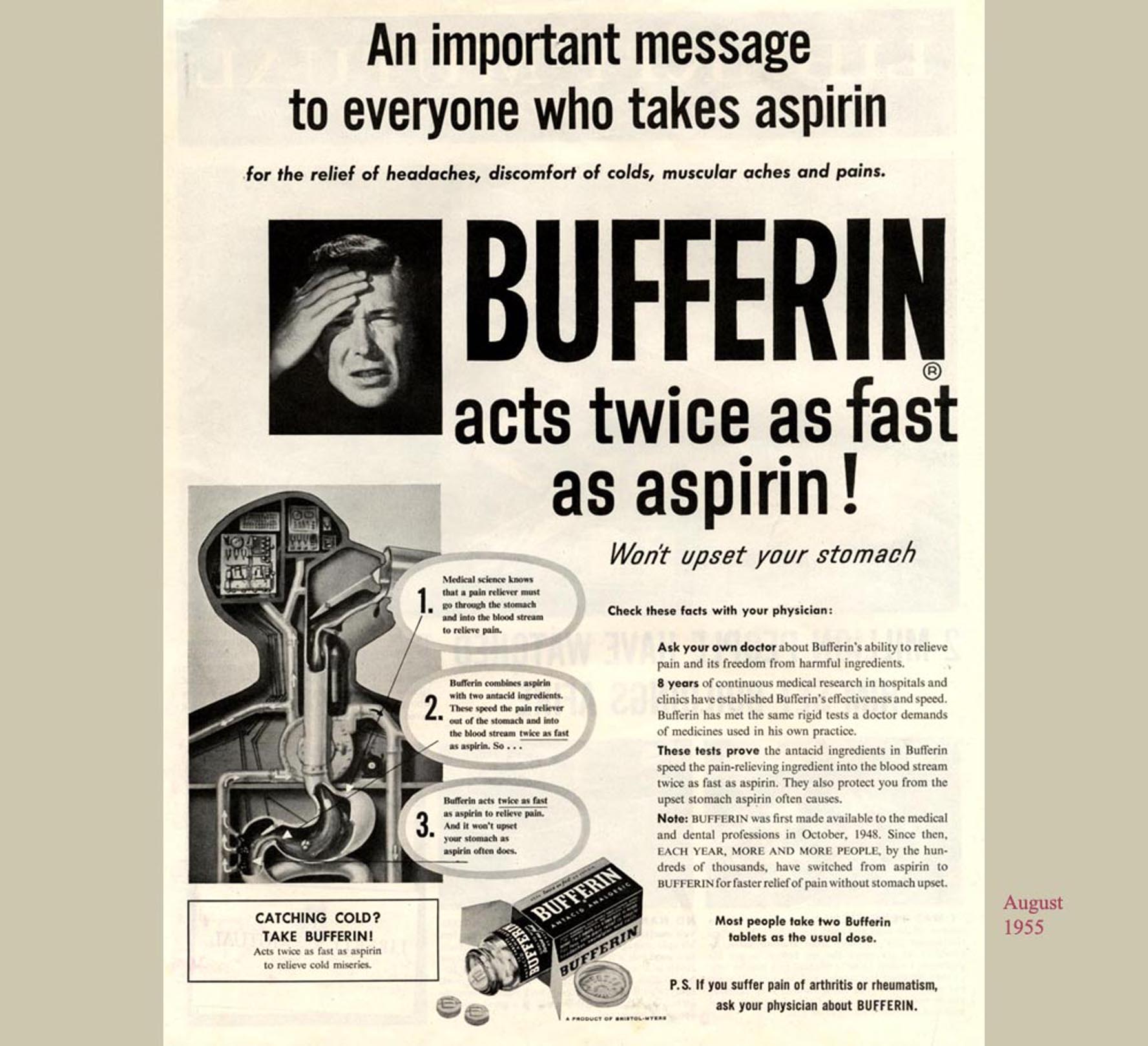
"Restaurant!" is from Mad #16 (October 1954). When you click on the splash panel to expand it to immense size, amazing details are revealed, and you can also see that he did not cheat. Almost every character has an extreme action or gag. A dog and an open mouth hint at the RCA Victor trademark. Two characters imitate the Kilroy nose pose, famed from WWII when the UK's Chad character was joined with the signature of Quincy, Massachusetts shipyard inspector J.J. Kilroy. Stanley Link's Ching Chow stands framed in the doorway (not unlike being framed by panel borders). On the wall is a giant ad for Bufferin. A woman wears a teapot on her head. The fan blows a man's false teeth from his mouth. Almost like a puzzle, the guy in the pink shirt conceals the scissors he used to clip the girl's hair ribbon to make his tie. The reader becomes aware of panels within panels and stories within stories.
To Elder it was only logical that Terry Lee and Pat Ryan from Terry and the Pirates would go to a Chinese restaurant in the comic book world. And in a real life restaurant, Elder once stood at the cash register and pulled lettuce from his wallet. What those other comic book publishers failed to understand was that Elder viewed life itself as the true theater of the absurd.
Curiously, most of the obits and tributes over the past few days make little or no mention of the superb work the team of Elder and John Severin did in the early 1950s with Severin penciling and Elder inking on stories for EC's two war comics (Frontline Combat, Two-Fisted Tales) and EC's science fiction, notably on two Ray Bradbury stories, "The Million Year Picnic" (Weird Fantasy 21, September 1953) and "King of the Grey Spaces" (Weird Fantasy 19, May 1953).

For more on Elder, take a look at Eddie Hunter's Chicken Fat, a blog named after one of Elder's familiar running gags. For more on Elder's influence, see the journal of William Stout and the Vancouver Art Gallery. The New York Times carried his obituary, "Will Elder, Cartoonist of Satiric Gifts and Overpopulated Scenes, Dies at 86," by William Grimes on Sunday.
Elder influence on Firesign Theatre album cover illustration by William Stout.
In Gary Vandenbergh's film, Will Elder: The Mad Playboy
of Art (2002), Kurtzman and Elder discuss their working methods.


Mad pages ©2008 EC Publications.


 Will Elder, one of the great funnymen of the 20th Century, died on Thursday. He could draw anything and make it funny. He took whatever Harvey Kurtzman came up with and carried it one step further.
How influential was Will Elder? Even film directors took a cue from him. In Louis Malle's Zazie dans le métro (1960) one scene is an Elder-style situation translated to live-action comedy with background action upstaging the foreground. Psychology Today once ran an illustration homage to Elder's memorable "Mole!" (Mad #2). In the 1950s, when other comic book publishers attempted to duplicate the success of Mad by spewing forth such titles as Wild, Crazy, Eh! and Madhouse, they focused on Elder's panels and had their cartoonists do chaotic backgrounds filled with silly signs and bad puns. But that only made it clear that they did not see funny the way Elder did.
"Restaurant!" is from Mad #16 (October 1954). When you click on the splash panel to expand it to immense size, amazing details are revealed, and you can also see that he did not cheat. Almost every character has an extreme action or gag. A dog and an open mouth hint at the RCA Victor trademark. Two characters imitate the Kilroy nose pose, famed from WWII when the UK's Chad character was joined with the signature of Quincy, Massachusetts shipyard inspector J.J. Kilroy. Stanley Link's Ching Chow stands framed in the doorway (not unlike being framed by panel borders). On the wall is a giant ad for Bufferin. A woman wears a teapot on her head. The fan blows a man's false teeth from his mouth. Almost like a puzzle, the guy in the pink shirt conceals the scissors he used to clip the girl's hair ribbon to make his tie. The reader becomes aware of panels within panels and stories within stories.
To Elder it was only logical that Terry Lee and Pat Ryan from Terry and the Pirates would go to a Chinese restaurant in the comic book world. And in a real life restaurant, Elder once stood at the cash register and pulled lettuce from his wallet. What those other comic book publishers failed to understand was that Elder viewed life itself as the true theater of the absurd.
Curiously, most of the obits and tributes over the past few days make little or no mention of the superb work the team of Elder and John Severin did in the early 1950s with Severin penciling and Elder inking on stories for EC's two war comics (Frontline Combat, Two-Fisted Tales) and EC's science fiction, notably on two Ray Bradbury stories, "The Million Year Picnic" (Weird Fantasy 21, September 1953) and "King of the Grey Spaces" (Weird Fantasy 19, May 1953).

For more on Elder, take a look at Eddie Hunter's Chicken Fat, a blog named after one of Elder's familiar running gags. For more on Elder's influence, see the journal of William Stout and the Vancouver Art Gallery. The New York Times carried his obituary, "Will Elder, Cartoonist of Satiric Gifts and Overpopulated Scenes, Dies at 86," by William Grimes on Sunday.
Elder influence on Firesign Theatre album cover illustration by William Stout.
In Gary Vandenbergh's film, Will Elder: The Mad Playboy
of Art (2002), Kurtzman and Elder discuss their working methods.

Labels: bradbury, chicken fat, ec, elder, kurtzman, little orphan annie, louis malle, mad
¶ 7:14 AM 8 comments
Saturday, May 19, 2007
Raising Orson Annie
Little Orphant Annie's come to our house to stay,
An' wash the cups an' saucers up, an' brush the crumbs away,
An' shoo the chickens off the porch, an' dust the hearth, an' sweep,
An' make the fire, an' bake the bread, an' earn her board-an'-keep
But why didn't Kael supply the Lockhart parody? In the mid-1970s I made a trip to the Boston Public Library to see if I could locate Lockhart's song, and after searching through a pile of books, I found it. I copied it down, but as years passed, the sheet I wrote on was eventually buried somewhere in my paper jungle. Recently, I decided to try again, this time doing a Google Books search. Once again, I found very few places where the lyrics were ever published, yet at last I can rescue it from obscurity. Here it is:
Little Orson Annie
Little Orson Annie's come to our house to play,
An' josh the motion pitchers up an' skeer the stars away
An' shoo the Laughtons off the lot an' build the sets an' sweep
An' wind the film an' write the talk an' earn her board-an'-keep
An' all us other acters, when our pitchur work is done,
We set around the Derby bar an' has the mostest fun,
A-list'nin' to the me-tales 'at Annie tells about,
An' the Gobblewelles 'll git YOU
Ef you DON'T WATCH OUT!
In her famed 1971 "Raising Kane" essay (originally in The New Yorker), Pauline Kael made a curious reference that stuck with me. She mentioned a 1939 song about Orson Welles by Gene Lockhart, but she did not elaborate or supply the lyrics. In a paragraph about the attitude of the film community to Welles prior to Citizen Kane (1941), she wrote:
Welles was hated in Hollywood long before he'd made a movie; he was hated almost upon his arrival. From time to time, Hollywood used to work up considerable puerile resentment against "outsiders" who dared to make movies. The scope of Welles' reputation seems to have infuriated Hollywood; it was a cultural reproach from the East, and the Hollywood people tried to protect themselves by closing ranks and making Welles a butt of their humor. Gene Lockhart composed a stupid, nasty ditty called "Little Orson Annie," which was sung at Hollywood parties; the name stuck and was used by the columnists, though Hedda Hopper supported him and suggested that Hollywood reserve judgment, and Louella Parsons, on December 31st, selected him as "the most discussed personality to come to the films in 1939."Intriguing, right? Well, obviously some sort of satirical springboard from James Whitcomb Riley's "Little Orphant Annie" (1885), still taught in schools in Indiana:
Little Orphant Annie's come to our house to stay,
An' wash the cups an' saucers up, an' brush the crumbs away,
An' shoo the chickens off the porch, an' dust the hearth, an' sweep,
An' make the fire, an' bake the bread, an' earn her board-an'-keep
But why didn't Kael supply the Lockhart parody? In the mid-1970s I made a trip to the Boston Public Library to see if I could locate Lockhart's song, and after searching through a pile of books, I found it. I copied it down, but as years passed, the sheet I wrote on was eventually buried somewhere in my paper jungle. Recently, I decided to try again, this time doing a Google Books search. Once again, I found very few places where the lyrics were ever published, yet at last I can rescue it from obscurity. Here it is:
Little Orson Annie
Little Orson Annie's come to our house to play,
An' josh the motion pitchers up an' skeer the stars away
An' shoo the Laughtons off the lot an' build the sets an' sweep
An' wind the film an' write the talk an' earn her board-an'-keep
An' all us other acters, when our pitchur work is done,
We set around the Derby bar an' has the mostest fun,
A-list'nin' to the me-tales 'at Annie tells about,
An' the Gobblewelles 'll git YOU
Ef you DON'T WATCH OUT!
-- Gene Lockhart
Labels: kael, kane, little orphan annie, welles
¶ 1:23 PM 0 comments