Potrzebie
Saturday, April 02, 2011

Human Planet begins April 10 on the Discovery Channel.
Labels: BBC, human planet
¶ 11:29 AM 0 comments
Saturday, November 13, 2010

I was once reading a Steve Ditko Dr. Strange when I discovered that the repetitive key dialogue from Michael McClure's controversial 1965 play The Beard was actually taken directly from a fantasy sequence in Dr. Strange: "Before you can pry any secrets from me, you must first find the real me. Which one will you pursue?"
Marvel Comics knew this, because I told them, but they chose not to promote the connection, evidently because they didn't want their comic book associated with a play that included a scene of cunnilingus between Jean Harlow and Billy the Kid.
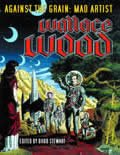
Below is the beginning (parts 1/2/3 of 7) of Jonathan Ross' BBC-4 documentary, In Search of Steve Ditko (2007). I was fortunate to have Ditko illustrate two of the comic book scripts I wrote in the 1960s and 1970s. Ditko and Wally Wood were friends and did a number of pencil/ink collaborations; I had the opportunity to color one of those, the first issue of The Destructor (1975).

“The Wizard of Dark Mountain” (from Jungle Jim 22) is obviously inspired by my memories of Dr. No (1962). Wally Wood's instruction when he suggested this story: "Remember, they are little people. Not pygmies. Little people." When I turned in the script, he handed it to Ditko, who followed my 8 1/2'' x 11'' layouts with such precision that he carefully included every detail. Ditko made a few slight alterations and improvements to my panel roughs. On page five, panel five, I had Jungle Jim holding Rima’s ass when he gave her a boost into the ventilating shaft; Ditko gave it a simple change to make it acceptable to the editors. On page three, panel four, my rough of the trio rock climbing was awkward, and he easily solved the problem by repositioning the characters.
In addition to the nice costume designs, he also injected an intensity to heighten the mood of the melodrama. Panel three on page five is executed with that imaginative and dynamic flair so typical of Ditko that the panel was duplicated to become the front cover.
Go to YouTube to watch Part Four.


Labels: BBC, ditko, jonathan ross, jungle jim, michael mcclure, wood
¶ 9:33 PM 4 comments
Tuesday, December 08, 2009
Lady Gaga on BBC Radio 1: "Poker Face"
Lady Gaga gives a very cool and snappy ending to pah pah "Poker Face" on BBC Radio. Best version of all?
Mum mum mum mah
Mum mum mum mah
I wanna hold em' like they do in Texas Plays
Fold em' let em' hit me raise it baby stay with me (I love it)
Lovegame and intuition play the cards with Spades to start
And after he's been hooked I'll play the one that's on his heart
Lady Gaga gives a very cool and snappy ending to pah pah "Poker Face" on BBC Radio. Best version of all?
Mum mum mum mah
Mum mum mum mah
I wanna hold em' like they do in Texas Plays
Fold em' let em' hit me raise it baby stay with me (I love it)
Lovegame and intuition play the cards with Spades to start
And after he's been hooked I'll play the one that's on his heart
Labels: BBC, lady gaga, poker face
¶ 2:26 PM 1 comments
Tuesday, March 31, 2009
Mars Is Heaven
Control click heading to hear the X Minus One adaptation of Ray Bradbury's Mars Is Heaven (May 8, 1955).


©WMG and Ray Bradbury

©WMG


Labels: BBC, bradbury, google, heaven, mars, martians, nasa, wood
¶ 2:27 PM 2 comments
Wednesday, March 25, 2009
There Will Come Soft Rains


Listen to the 1956 X Minus One adaptation of "There Will Come Soft Rains''.
Peter Cotter's animated adaptation...
Russian 1984 animated adaptation...
There will fall soft rains
Sara Teasdale's poem...
There will come soft rains and the smell of the ground,
And swallows circling with their shimmering sound;
And frogs in the pool singing at night,
And wild plum trees in tremulous white;
Robins will wear their feathery fire,
Whistling their whims on a low fence-wire;
And not one will know of the war, not one
Will care at last when it is done.
Not one would mind, neither bird nor tree,
If mankind perished utterly;
And Spring herself when she woke at dawn
Would scarcely know that we were gone.
--Sara Teasdale (1920)

Click heading above to hear the start of the 1977 BBC adaptation of "There Will Come Soft Rains''.
http://www.unz.org/Pub/Colliers-1950may06-00034?View=PDF&apages=0030
©WMG and Ray Bradbury
Wally Wood drew EC's adaptation of Ray Bradbury's "There Will Come Soft Rains" for Weird Fantasy 17 (January-February 1953). Note Wood's error on page two, panel four: The garage door cannot open or close with the "waiting car" parked midway into the doorframe. (The caption is the same as Bradbury's original paragraph.) In panel five, "After a long wait, the door swung down again"... which would smash the hood of the car. To read Ray Bradbury's original story (first published in the May 6, 1950 issue of Collier's), go here. In the Collier's original, the story takes place on April 28, 1985. Later, the date was changed.
Listen to the 1956 X Minus One adaptation of "There Will Come Soft Rains''.
Peter Cotter's animated adaptation...
Russian 1984 animated adaptation...
There will fall soft rains
Sara Teasdale's poem...
There will come soft rains and the smell of the ground,
And swallows circling with their shimmering sound;
And frogs in the pool singing at night,
And wild plum trees in tremulous white;
Robins will wear their feathery fire,
Whistling their whims on a low fence-wire;
And not one will know of the war, not one
Will care at last when it is done.
Not one would mind, neither bird nor tree,
If mankind perished utterly;
And Spring herself when she woke at dawn
Would scarcely know that we were gone.
--Sara Teasdale (1920)

Labels: BBC, bradbury, cotter, ec, soft rains, teasdale, ussr, wood, x minus one
¶ 9:13 AM 6 comments
Tuesday, January 20, 2009
Peter Foldes' Hunger (1974)
.
Here is a still from Peter Foldes' Metadata (1971), one of the earliest computer animated films, made a full decade before Steven Lisberger's Tron (1982) and the Cray computer sequences in The Last Starfighter (1984).

Peter Foldes (1924-1977) was a pioneer in computer animation, which he introduced in Metadata, using the National Research Council of Canada's computer. The film was made in collaboration with NRCC scientists Nestor Burtnyk and Marceli Wein, regarded in Canada as the fathers of computer animation technology. To tackle the themes of poverty and world hunger, Foldes again used computer animation in his Oscar-nominated Hunger (1974), doing line drawings of key frames and letting the computer create the transformations from one scene to another. Note similarity of man morphing into auto in Hunger with the Tron riders merging into their light cycles. Made for the National Film Board of Canada, Hunger won the Jury Prize at the 1974 Cannes Film Festival.
Born in Budapest, Foldes moved to England in 1946 and studied at the Slade School of Art. Later, he lived and worked in Paris. His other films include Animated Genesis (1952), A Short Vision (1956), Plus Vite (1965), Visages des femmes (1968), Je. Tu. Elles./I. You. They. (1972), Réve (1977) and Envisage (1977). He also worked on the computer graphics for the 1973 BBC-TV mini-series The Ascent of Man (1973). A Short Vision, his collaboration with Joan Foldes about a nuclear holocaust, was shown on The Ed Sullivan Show in 1956.
Foldes explained his approach to Giannalberto Bendazzi (Cartoon: One Hundred Years of Cinema Animation, 1994):
1976 interview with Marceli Wein about Hunger:
What kind of computer and hardware were used?
The computer was an SEL 840A - SEL later became Gould. It had wordlength of 24 bits, because it was a realtime computer for command and control and data acquisition. The 24 bits were well suited for 2 analog quantities such as 12 bit coordinates. Memory was 8K words or 24K bytes with 1.75 microsecond cycle time. The computer's realtime strength was in its interrupt system. There was no command line interpreter and all control was from the display, an IDI point plotting display (Carl Machover was VP of IDI). The graphics controller was home grown design and built in the lab at the National Research Council of Canada (NRC).
Were there parts where inbetweening was manual and not computer done -- this seemed the case where the woman was dancing?
All in-betweening was by software. The dancer was rotoscoped (traced from actual film) every 12th frame and then software interpolated. They actually filmed a gogo dancer in their building for the occasion.
When exactly was the system and the film done?
The project was started in 1969 and Nestor Burtnyk was the senior person reponsible for much of the software. Because he changed career directions he disappeared from the scene in the graphics community. The paper describing computer assised key frame animation was presented at the Fall 1970 SMPTE conference and appeared in the SMPTE Journal in March 1971. They made an experimental film with the National Film Board of Canada (NFB) and Peter Foldes in 1971 - Metadata - then started working on Hunger. The work was completed in 1973 but the optical work at NFB continued until the release in 1974. Peter Foldes commuted from Paris for three-week stints leaving the technical people to work on software enhancements between visits.
What were the prizes that it won and were any related to the technology as opposed to for the film in general?
The major prizes included: Cannes Prix du Jury, Academy Oscar Nomination, a prize at the Berlin Festival and five others. All were for artistic achievement. The Ontario Science Centre and the Film Institute gave them an award just last fall for the technical side of the work.
Here is a still from Peter Foldes' Metadata (1971), one of the earliest computer animated films, made a full decade before Steven Lisberger's Tron (1982) and the Cray computer sequences in The Last Starfighter (1984).

Peter Foldes (1924-1977) was a pioneer in computer animation, which he introduced in Metadata, using the National Research Council of Canada's computer. The film was made in collaboration with NRCC scientists Nestor Burtnyk and Marceli Wein, regarded in Canada as the fathers of computer animation technology. To tackle the themes of poverty and world hunger, Foldes again used computer animation in his Oscar-nominated Hunger (1974), doing line drawings of key frames and letting the computer create the transformations from one scene to another. Note similarity of man morphing into auto in Hunger with the Tron riders merging into their light cycles. Made for the National Film Board of Canada, Hunger won the Jury Prize at the 1974 Cannes Film Festival.
Born in Budapest, Foldes moved to England in 1946 and studied at the Slade School of Art. Later, he lived and worked in Paris. His other films include Animated Genesis (1952), A Short Vision (1956), Plus Vite (1965), Visages des femmes (1968), Je. Tu. Elles./I. You. They. (1972), Réve (1977) and Envisage (1977). He also worked on the computer graphics for the 1973 BBC-TV mini-series The Ascent of Man (1973). A Short Vision, his collaboration with Joan Foldes about a nuclear holocaust, was shown on The Ed Sullivan Show in 1956.
Below: part one and part two of Hunger:
Foldes explained his approach to Giannalberto Bendazzi (Cartoon: One Hundred Years of Cinema Animation, 1994):
The art of the 20th Century is cinema. The language of the 20th Century is technology. In my films, I made metamorphosis. Visages des femmes was a perpetual metamorphosis, created by handmade drawings. With a computer, I can still make metamorphoses, but with greater control over each line of the drawing, which I can move as I please. And I work faster, because the machine frees the artist from the fatigue of labor. A miniaturist can work for seven years on a single work; nobody says that Rembrandt’s paintings are less beautiful only because he spent less time on them.
1976 interview with Marceli Wein about Hunger:
What kind of computer and hardware were used?
The computer was an SEL 840A - SEL later became Gould. It had wordlength of 24 bits, because it was a realtime computer for command and control and data acquisition. The 24 bits were well suited for 2 analog quantities such as 12 bit coordinates. Memory was 8K words or 24K bytes with 1.75 microsecond cycle time. The computer's realtime strength was in its interrupt system. There was no command line interpreter and all control was from the display, an IDI point plotting display (Carl Machover was VP of IDI). The graphics controller was home grown design and built in the lab at the National Research Council of Canada (NRC).
Were there parts where inbetweening was manual and not computer done -- this seemed the case where the woman was dancing?
All in-betweening was by software. The dancer was rotoscoped (traced from actual film) every 12th frame and then software interpolated. They actually filmed a gogo dancer in their building for the occasion.
When exactly was the system and the film done?
The project was started in 1969 and Nestor Burtnyk was the senior person reponsible for much of the software. Because he changed career directions he disappeared from the scene in the graphics community. The paper describing computer assised key frame animation was presented at the Fall 1970 SMPTE conference and appeared in the SMPTE Journal in March 1971. They made an experimental film with the National Film Board of Canada (NFB) and Peter Foldes in 1971 - Metadata - then started working on Hunger. The work was completed in 1973 but the optical work at NFB continued until the release in 1974. Peter Foldes commuted from Paris for three-week stints leaving the technical people to work on software enhancements between visits.
What were the prizes that it won and were any related to the technology as opposed to for the film in general?
The major prizes included: Cannes Prix du Jury, Academy Oscar Nomination, a prize at the Berlin Festival and five others. All were for artistic achievement. The Ontario Science Centre and the Film Institute gave them an award just last fall for the technical side of the work.
Labels: animation, BBC, computer, drawing, foldes, hungary, hunger, lisberger, metadata, national film board of canada, tech, tron
¶ 6:28 PM 2 comments
Thursday, December 04, 2008
Seeds of Triffids

 By the end of 1950, I was reading Astounding, F&SF, Galaxy and Groff Conklin anthologies. Just when I was thinking that wasn't enough, Collier's landed in the mailbox, and I was gone with the Wyndham, entranced by the slow dance of the killing plants.
The Day of the Triffids by John Wyndham (1903-69) first appeared in Collier's (January 6, 1951) as Revolt of the Triffids, an abridged serial. Above, courtesy of Canadian-based art historian and cartoonist Leif Ping, is Fred Banbery's illustration for the serial's conclusion in Collier's (February 3, 1951). Banbery (1913-99) also created covers for Alfred Hitchcock books, including a compelling composite of Hitchcock's head with a Psycho-like house.
With an Earle Bergey cover illustration, Revolt of the Triffids was published by Popular Library in March 1952. In 1957 it was adapted for BBC Radio, followed by the disappointing 1962 movie starring Howard Keel. It was effectively dramatized by the BBC in a 1981 television mini-series of six episodes. Now the BBC has announced a TV remake scheduled to air in 2009 in two feature-length parts. This new version will be set in the year 2011. Meanwhile, Steven Spielberg has acquired the film rights to another Wyndham novel, Chocky.

The startling synchronicity described below was in the Comments section beneath an article on the new remake at BBC News Archive.
Below is part one of The Invisible Man of Science Fiction, a documentary about Wyndham which was telecast in 2005 on BBC Four. See YouTube for the other parts.

Discussion of triffids terror on The Colbert Report:
Junot Diaz: Cane fields are scary. Any time you drive by them, they're like triffids. They clack in the wind. I guess as a kid I was terrified of them.
Stephen Colbert: You're the very first guest to ever make a triffids reference.
Diaz: I don't know if that's the saddest thing I ever heard.
Colbert: It's a great honor. You've achieved a level of nerddom that is heretofore... We might have to check the building for structural damage. You geeked out so hard on me. People at home are rushing to Wikipedia to find out what triffids are.

 By the end of 1950, I was reading Astounding, F&SF, Galaxy and Groff Conklin anthologies. Just when I was thinking that wasn't enough, Collier's landed in the mailbox, and I was gone with the Wyndham, entranced by the slow dance of the killing plants.
 The Day of the Triffids by John Wyndham (1903-69) first appeared in Collier's (January 6, 1951) as Revolt of the Triffids, an abridged serial. Above, courtesy of Canadian-based art historian and cartoonist Leif Ping, is Fred Banbery's illustration for the serial's conclusion in Collier's (February 3, 1951). Banbery (1913-99) also created covers for Alfred Hitchcock books, including a compelling composite of Hitchcock's head with a Psycho-like house.
With an Earle Bergey cover illustration, Revolt of the Triffids was published by Popular Library in March 1952. In 1957 it was adapted for BBC Radio, followed by the disappointing 1962 movie starring Howard Keel. It was effectively dramatized by the BBC in a 1981 television mini-series of six episodes. Now the BBC has announced a TV remake scheduled to air in 2009 in two feature-length parts. This new version will be set in the year 2011. Meanwhile, Steven Spielberg has acquired the film rights to another Wyndham novel, Chocky.

The startling synchronicity described below was in the Comments section beneath an article on the new remake at BBC News Archive.
My very freaky Triffids story... I first saw this when I was eight and it has haunted me ever since. Finally I found it in 2005 on DVD in a local store. I rushed home and started to watch what I'd waited so long to see. But it wasn't as scary or haunting as I remember. Then, out of nowhere, came the most frightening thing. In the scene where Bill is taken to a hotel with a group of blind people to look after, the scenery starts to look very familiar. It's my street. The minibus then pulls up to the hotel. And guess what? The hotel is my house! The shot freezes on my bedroom window - the very room where I'm watching the DVD, 24 years after it was filmed. My apartment is in an old building that used to be a hotel. So I must have seen my future home when I first saw the series back in 1982. What does it all mean? Any ideas? Is it the end of the world?
G Ben, London, UK
Below is part one of The Invisible Man of Science Fiction, a documentary about Wyndham which was telecast in 2005 on BBC Four. See YouTube for the other parts.

Discussion of triffids terror on The Colbert Report:
Junot Diaz: Cane fields are scary. Any time you drive by them, they're like triffids. They clack in the wind. I guess as a kid I was terrified of them.
Stephen Colbert: You're the very first guest to ever make a triffids reference.
Diaz: I don't know if that's the saddest thing I ever heard.
Colbert: It's a great honor. You've achieved a level of nerddom that is heretofore... We might have to check the building for structural damage. You geeked out so hard on me. People at home are rushing to Wikipedia to find out what triffids are.
Labels: banbery, BBC, bergey, colbert, collier's, diaz, lysenko, science fiction, synchronicity, triffids, wyndham
¶ 6:43 AM 0 comments
Monday, March 03, 2008
Vivian Kubrick's Making The Shining
.
Vivian Kubrick was 17 years old when she made this documentary for BBC Arena. It runs 34 minutes, 59 seconds. Curiously synchronistic to post this right after the previous post, inasmuch as Jack Nicholson once did an interview where he revealed that in The Shining he was attempting to recreate the crazed characters he remembered from reading EC Comics. The documentary shows his preparation for the ax-wielding scene, getting into an EC frame of mind and looking not unlike a panel from Crime SuspenStories.
For Jerry Saravia's review of the documentary, click here.
Vivian Kubrick was 17 years old when she made this documentary for BBC Arena. It runs 34 minutes, 59 seconds. Curiously synchronistic to post this right after the previous post, inasmuch as Jack Nicholson once did an interview where he revealed that in The Shining he was attempting to recreate the crazed characters he remembered from reading EC Comics. The documentary shows his preparation for the ax-wielding scene, getting into an EC frame of mind and looking not unlike a panel from Crime SuspenStories.
For Jerry Saravia's review of the documentary, click here.
Labels: BBC, ec, jack nicholson, kubrick
¶ 7:31 PM 0 comments
Tuesday, September 18, 2007
Donna Tartt: The Secret History & Luke Weatherill: Prologue
 With a theme of guilt, the brief animation near the bottom of this post is Prologue by Luke Weatherill, a 21-year-old UK student in Leeds. His animation is based on Donna Tartt's psychological literary thriller, The Secret History (Knopf, 1992), set at a thinly disguised Bennington College. She spent 14 days recording the unabridged audiobook of the 592-page novel. Listen to her read the beginning of the novel, which is told in first-person by the male narrator. Richard Pepen is 28 years old, looking back at events that happened when he was a 19-year-old college student.
She talked about this character in a 1992 BBC interview: "He's a young man from a very bleak, suburban, lower-class California background -- Silicon Valley, shopping malls and all that. Highly intelligent and clear thinking but still very much an adolescent. Self-centered, ambitious, vain. He just hasn't seen as much of the world as he'd like to pretend he has, and in spite of his intelligence he's also very impressionable. When he leaves home for the first time, at the beginning of the book, he's dazzled by really the absolutely worst sort of crowd and doesn't realize what these people are and what he's gotten himself into until it's too late. At bottom, humans are pack animals, and people are much more prone to behave monstrously as a group than they are on their own. So this very intelligent but naive young man is sort of beguiled by these people he admires into doing something that's going to ruin the rest of his life.
"The first half of The Secret History is about how this happens. It's about the narrator's seduction into evil, very gradually and without his realizing it, and I hope without the reader realizing it either. One of the most insidious things about evil is how, at the start, it can make itself appear very enchanting and delightful, and then only when it's too late does one see what one's become. The second half of the book is basically about the curtain falling away and his realization that what he's actually done is help to murder one of his friends... Not an unlikeable young man. He's funny, he's intelligent. I think he's actually quite a sympathetic character. What I hope is that readers will find themselves seduced along with him and share his horror at seeing what's actually been happening without anyone noticing it. He had to be male basically for the dynamics of the story to work as they did, but it would just have been a very different novel if the narrator had been female... This a novel, not an autobiography. I'd be quite limited as a novelist if I only wrote stories about young women who lived in Greenwich Village and smoked too many cigarettes...
"All of them are young, rich, intelligent, charming, very well socially connected. They lead very studious, very sort of pastoral lives; the school is out in the country. They're also incredibly arrogant, both intellectually and morally. They study Classics; that's their great passion, and they take it deadly seriously. But they're young, they're callous, they don't temper their studies with any sort of balance or humanity. They live in a kind of a solar system of their own making, and they really have just very grandiose ideas about what it's possible for human beings to do. Only extremely young people have this kind of arrogance. They're very intolerant of imperfection. They want to root out their own perfections by force, and they're not tolerant at all of imperfection in others. There's something Nietzche once said about the Greeks, which is kind of appropriate in this context: 'The unsubdued search for knowledge in itself barbarizes just as much as hatred of knowledge.' And in this effort of trying to civilize themselves or tearing out their imperfections they also manage to destroy a lot of their humanity.
"Bunny is just this very sort of bumbling, comic, pontificating, character. Typical product of a second-rate, American boarding school. Superficially, as far as education and social position go, he's very much like the rest of them, but actually he's far less intelligent. The kind of person you just know is going to be this useless alcoholic fixture at the country club by the time he's 35. Henry's a perfectionist, really kind of inhuman, very brilliant, very erratic and enigmatic. He's a stiff, cold person, Machiavellian, ascetic, and he's made himself what he is by sheer strength of will. His aspiration is to be this Platonic creature of pure rationality, and that's why he's attracted to the Classics, and particularly to the Greeks--all those high, cold ideas of beauty and perfection. I think it's what in the end that gets him into trouble.
 ¶ 9:06 AM 0 comments
 With a theme of guilt, the brief animation near the bottom of this post is Prologue by Luke Weatherill, a 21-year-old UK student in Leeds. His animation is based on Donna Tartt's psychological literary thriller, The Secret History (Knopf, 1992), set at a thinly disguised Bennington College. She spent 14 days recording the unabridged audiobook of the 592-page novel. Listen to her read the beginning of the novel, which is told in first-person by the male narrator. Richard Pepen is 28 years old, looking back at events that happened when he was a 19-year-old college student.
She talked about this character in a 1992 BBC interview: "He's a young man from a very bleak, suburban, lower-class California background -- Silicon Valley, shopping malls and all that. Highly intelligent and clear thinking but still very much an adolescent. Self-centered, ambitious, vain. He just hasn't seen as much of the world as he'd like to pretend he has, and in spite of his intelligence he's also very impressionable. When he leaves home for the first time, at the beginning of the book, he's dazzled by really the absolutely worst sort of crowd and doesn't realize what these people are and what he's gotten himself into until it's too late. At bottom, humans are pack animals, and people are much more prone to behave monstrously as a group than they are on their own. So this very intelligent but naive young man is sort of beguiled by these people he admires into doing something that's going to ruin the rest of his life.
"The first half of The Secret History is about how this happens. It's about the narrator's seduction into evil, very gradually and without his realizing it, and I hope without the reader realizing it either. One of the most insidious things about evil is how, at the start, it can make itself appear very enchanting and delightful, and then only when it's too late does one see what one's become. The second half of the book is basically about the curtain falling away and his realization that what he's actually done is help to murder one of his friends... Not an unlikeable young man. He's funny, he's intelligent. I think he's actually quite a sympathetic character. What I hope is that readers will find themselves seduced along with him and share his horror at seeing what's actually been happening without anyone noticing it. He had to be male basically for the dynamics of the story to work as they did, but it would just have been a very different novel if the narrator had been female... This a novel, not an autobiography. I'd be quite limited as a novelist if I only wrote stories about young women who lived in Greenwich Village and smoked too many cigarettes...
"All of them are young, rich, intelligent, charming, very well socially connected. They lead very studious, very sort of pastoral lives; the school is out in the country. They're also incredibly arrogant, both intellectually and morally. They study Classics; that's their great passion, and they take it deadly seriously. But they're young, they're callous, they don't temper their studies with any sort of balance or humanity. They live in a kind of a solar system of their own making, and they really have just very grandiose ideas about what it's possible for human beings to do. Only extremely young people have this kind of arrogance. They're very intolerant of imperfection. They want to root out their own perfections by force, and they're not tolerant at all of imperfection in others. There's something Nietzche once said about the Greeks, which is kind of appropriate in this context: 'The unsubdued search for knowledge in itself barbarizes just as much as hatred of knowledge.' And in this effort of trying to civilize themselves or tearing out their imperfections they also manage to destroy a lot of their humanity.
"Bunny is just this very sort of bumbling, comic, pontificating, character. Typical product of a second-rate, American boarding school. Superficially, as far as education and social position go, he's very much like the rest of them, but actually he's far less intelligent. The kind of person you just know is going to be this useless alcoholic fixture at the country club by the time he's 35. Henry's a perfectionist, really kind of inhuman, very brilliant, very erratic and enigmatic. He's a stiff, cold person, Machiavellian, ascetic, and he's made himself what he is by sheer strength of will. His aspiration is to be this Platonic creature of pure rationality, and that's why he's attracted to the Classics, and particularly to the Greeks--all those high, cold ideas of beauty and perfection. I think it's what in the end that gets him into trouble.
"Literature today seems to be divided into two camps: extremely literary work, with lots of emphasis on technique and style and so forth and then these sort of popular blockbusters, and I know at heart I'm a manic stylist. I love a beautiful sentence, a well-constructed paragraph, some gorgeous turn of phrase that'll just make you sit back in your chair and say oh-oh. But unfortunately I think a lot of books that are well constructed are really very self-involved and don't take the reader very much into consideration. Technique and everything aside I think that when you get right down to it people read because they want to be entertained, and I don't see any reason why a piece of work can't be entertaining but also, yes, very well put together. I think it's a very accessible book. I wanted to write a book that really did have a wide appeal, a literary book, but not an elitist book, and I've really been surprised at the wide variety of people it has appealed to."
In the middle of this RTE TV panel discussion, there is a clip of Donna Tartt reading from her second novel, The Little Friend.
In the middle of this RTE TV panel discussion, there is a clip of Donna Tartt reading from her second novel, The Little Friend.