Potrzebie
Sunday, July 31, 2011
The Tree of Life and Thomas Wilfred

Terrence Malick's The Tree of Life uses portions of Thomas Wilfred's Lumia Opus 161 (1965-66) at the beginning and end. A good reason to revive my history of Wilfred, the Lumia and various color organs. Here it is, as published in the September 1980 issue of Heavy Metal. (A portion of this column was reworked into my introduction for This Planet Is Doomed: The Science Fiction Poetry of Sun Ra, published this month by Miriam Linna's Kicks Books.) The green image on the first page is from Wilfred's Orientale: Opus 155. The comic strip spread across the other pages is Rock Opera by Rod Kierkegaard, Jr.
Also see Gregory Zinman's "Dept. of Optics: Lumia" in the June 27, 2011 issue of The New Yorker. Because of Malick there's now a renewed interest in Wilfred, who is no longer a forgotten figure.


Opus 161

Terrence Malick's The Tree of Life uses portions of Thomas Wilfred's Lumia Opus 161 (1965-66) at the beginning and end. A good reason to revive my history of Wilfred, the Lumia and various color organs. Here it is, as published in the September 1980 issue of Heavy Metal. (A portion of this column was reworked into my introduction for This Planet Is Doomed: The Science Fiction Poetry of Sun Ra, published this month by Miriam Linna's Kicks Books.) The green image on the first page is from Wilfred's Orientale: Opus 155. The comic strip spread across the other pages is Rock Opera by Rod Kierkegaard, Jr.
Also see Gregory Zinman's "Dept. of Optics: Lumia" in the June 27, 2011 issue of The New Yorker. Because of Malick there's now a renewed interest in Wilfred, who is no longer a forgotten figure.


Labels: heavy metal, kicks, linna, malick, sun ra, wilfred
¶ 9:14 AM 0 comments
Saturday, January 01, 2011
Satan oscillate my metallic sonatas
 .
.
Here's part two of my 1979 interview with Stephen King as it appeared in the February 1980 issue of Heavy Metal. Rereading, I recall the surrounding events, fore and aft. In retrospect, it's a peculiar narrative of close encounters with some friendly and a few unfriendly people. To read part one of the interview, go here and scroll down.
When I was teaching Boston art students in the 1970s, I would sometimes be broke during the summer months and seek out freelance work, which would usually come through at the end of the summer just when it was time to teach again.
In the summer of 1979, I was dining from the vending machines in the Harvard Architectural Center. The building was cool, and I'd stop there as I walked through the heat from Somerville to Harvard Square. One day someone phoned and told me that Stephen King was soon due to arrive in Boston on a publicity tour promoting The Dead Zone. Around this time, Publishers Weekly was running an ad touting King as "the bestselling author in the world".
I phoned the Viking Press publicist, got on the list and later that week I interviewed King at the Ritz across from the Boston Public Garden. Back in Somerville, I phoned the arts editor of The Boston Globe and told her that I had taped an interview with Stephen King. She said, "Who's that?" I said, "Er... I think he's like the bestselling author in the world." She said, "Perhaps you should speak to our book editor."
She transferred the call, and I spoke to the Globe book editor, described what I had, and he replied in a somewhat condescending manner: "Oh, we don't do author interviews." I hung up, contemplating the next move. I phoned American Film and spoke to film critic-editor Hollis Alpert (1916-2007), who asked, "Has he been involved in the filming of The Shining?" I said, "He went to England, and they showed him around the set." Alpert said, "In that case, we'll have one of our people write something." That was it. Three strikes, and I was out. It sure seemed incredible. I had an interview with the world's bestselling author, yet no one was interested. I put the tapes aside, planning another tasty stopover at the vending machines.
A few days later, Heavy Metal editor Ted White phoned, said he wanted me to do a monthly film column for the magazine, gave me a two-week deadline and asked what I was going to write. "How about Stephen King?" I said. I sat at the IBM Selectric and immediately began transcribing the tapes in order to generate 2,000 words for the January 1980 issue. No more vending machines. Even Harlan Ellison once wrote that Heavy Metal paid better than his other markets. The rate was 25¢ a word. This meant if I typed "a", "of", "to" and "the", I had already made one dollar.
For the second column installment, I had a bit more time, so I added another interview by phoning art director Jim Plumeri at Signet. I decided I needed to give Heavy Metal a photo of a topiary to illustrate the column's discussion of topiaries and mazes. Disney World had a topiary, so I phoned the Disney World publicist. He said, yes, a topiary was there, and yes, he had a photo, but no, he would not send it to me. I phoned the Massachusetts Horticultural Society and spoke to a woman who said, "Yes, we have several topiary photos." I said, "I'll be right over."
I arrived across from Symphony Hall at the corner of Massachusetts Avenue and Huntington Avenue where the Massachusetts Horticultural Society turned out to be nothing more than a single room of filing cabinets staffed by an attractive young woman, the only person there. She opened a file drawer and showed me a file folder with topiary photos. I said, "Wow! These are just what I was hoping for. Would it be possible to get copies?" She said, "You can have them. Take them." A refreshing attitude, I thought, but why? Was she getting her little bit of revenge for her Kafkaesque job situation, surrounded by filing cabinets and trapped alone in a room where few entered? Or was she simply leaving the job the next week? Or maybe she determined that 20 years might pass before anyone else would want a topiary photo. Whatever, it certainly counterbalanced the irritating refusal of the Disney publicist.
When I mailed in the second interview installment, Julie Simmons-Lynch read it and said to Ted White, "What's this? He only writes about Stephen King?"
After all that I went through to acquire a topiary picture, I was disappointed to see that Heavy Metal had reduced the photo, cropped it and covered it with a screen so dark that the image was obscured. A curious case where the photo credit is more visible than the photo, as you can see below.


Here's part two of my 1979 interview with Stephen King as it appeared in the February 1980 issue of Heavy Metal. Rereading, I recall the surrounding events, fore and aft. In retrospect, it's a peculiar narrative of close encounters with some friendly and a few unfriendly people. To read part one of the interview, go here and scroll down.
When I was teaching Boston art students in the 1970s, I would sometimes be broke during the summer months and seek out freelance work, which would usually come through at the end of the summer just when it was time to teach again.
In the summer of 1979, I was dining from the vending machines in the Harvard Architectural Center. The building was cool, and I'd stop there as I walked through the heat from Somerville to Harvard Square. One day someone phoned and told me that Stephen King was soon due to arrive in Boston on a publicity tour promoting The Dead Zone. Around this time, Publishers Weekly was running an ad touting King as "the bestselling author in the world".
I phoned the Viking Press publicist, got on the list and later that week I interviewed King at the Ritz across from the Boston Public Garden. Back in Somerville, I phoned the arts editor of The Boston Globe and told her that I had taped an interview with Stephen King. She said, "Who's that?" I said, "Er... I think he's like the bestselling author in the world." She said, "Perhaps you should speak to our book editor."
She transferred the call, and I spoke to the Globe book editor, described what I had, and he replied in a somewhat condescending manner: "Oh, we don't do author interviews." I hung up, contemplating the next move. I phoned American Film and spoke to film critic-editor Hollis Alpert (1916-2007), who asked, "Has he been involved in the filming of The Shining?" I said, "He went to England, and they showed him around the set." Alpert said, "In that case, we'll have one of our people write something." That was it. Three strikes, and I was out. It sure seemed incredible. I had an interview with the world's bestselling author, yet no one was interested. I put the tapes aside, planning another tasty stopover at the vending machines.
A few days later, Heavy Metal editor Ted White phoned, said he wanted me to do a monthly film column for the magazine, gave me a two-week deadline and asked what I was going to write. "How about Stephen King?" I said. I sat at the IBM Selectric and immediately began transcribing the tapes in order to generate 2,000 words for the January 1980 issue. No more vending machines. Even Harlan Ellison once wrote that Heavy Metal paid better than his other markets. The rate was 25¢ a word. This meant if I typed "a", "of", "to" and "the", I had already made one dollar.
For the second column installment, I had a bit more time, so I added another interview by phoning art director Jim Plumeri at Signet. I decided I needed to give Heavy Metal a photo of a topiary to illustrate the column's discussion of topiaries and mazes. Disney World had a topiary, so I phoned the Disney World publicist. He said, yes, a topiary was there, and yes, he had a photo, but no, he would not send it to me. I phoned the Massachusetts Horticultural Society and spoke to a woman who said, "Yes, we have several topiary photos." I said, "I'll be right over."
I arrived across from Symphony Hall at the corner of Massachusetts Avenue and Huntington Avenue where the Massachusetts Horticultural Society turned out to be nothing more than a single room of filing cabinets staffed by an attractive young woman, the only person there. She opened a file drawer and showed me a file folder with topiary photos. I said, "Wow! These are just what I was hoping for. Would it be possible to get copies?" She said, "You can have them. Take them." A refreshing attitude, I thought, but why? Was she getting her little bit of revenge for her Kafkaesque job situation, surrounded by filing cabinets and trapped alone in a room where few entered? Or was she simply leaving the job the next week? Or maybe she determined that 20 years might pass before anyone else would want a topiary photo. Whatever, it certainly counterbalanced the irritating refusal of the Disney publicist.
When I mailed in the second interview installment, Julie Simmons-Lynch read it and said to Ted White, "What's this? He only writes about Stephen King?"
After all that I went through to acquire a topiary picture, I was disappointed to see that Heavy Metal had reduced the photo, cropped it and covered it with a screen so dark that the image was obscured. A curious case where the photo credit is more visible than the photo, as you can see below.


Labels: heavy metal, stephen king, ted white
¶ 10:40 PM 0 comments
Saturday, November 20, 2010
Shelley Duvall, Stanley Kubrick and Stephen King
.
Mondo Film & Video Guide interview with Shelley Duvall about The Shining (November 5, 2010).
To see Vivian Kubrick's unforgettable documentary, Making The Shining, go here
Below is part one of my three-part 1979 interview with Stephen King as it appeared in the January 1980 issue of Heavy Metal. This was the debut of the Heavy Metal columns. I was told to devise a column name that was something unique, never before associated with films. After rejecting a few possibilities, I coined the word "Flix" as the title. It was a word I had never seen anywhere. Prior to January 1980, there was "flicks" but no "flix". Perhaps I should have trademarked it, eh?
Correction: Other sources say the Stanley that evening had taped orchestral music, not a live band.


Mondo Film & Video Guide interview with Shelley Duvall about The Shining (November 5, 2010).
To see Vivian Kubrick's unforgettable documentary, Making The Shining, go here
Below is part one of my three-part 1979 interview with Stephen King as it appeared in the January 1980 issue of Heavy Metal. This was the debut of the Heavy Metal columns. I was told to devise a column name that was something unique, never before associated with films. After rejecting a few possibilities, I coined the word "Flix" as the title. It was a word I had never seen anywhere. Prior to January 1980, there was "flicks" but no "flix". Perhaps I should have trademarked it, eh?
Correction: Other sources say the Stanley that evening had taped orchestral music, not a live band.


Labels: heavy metal, kubrick, shelley duvall, stephen king
¶ 5:59 PM 0 comments
Thursday, July 01, 2010
Under the Sea
 In the summer of 1979, I signed on as the film columnist for Heavy Metal, then edited by Ted White. Ted wanted to use an unusual title on the column, something different from the familiar words associated with films and filming. After some thought, I coined the word Flix, which I had never seen in print anywhere. Ted introduced the magazine's new quartet of columns (on music, film, sf, underground comics) in the January 1980 issue.
The column installment below, based on my interview with the Disney artist Nino Carbe (1909-1993), was published in the April 1980 issue. As you'll see if you read it, I chose an enigma-wrapped-in-a-riddle approach with more than a few convoluted Cornell Woolrich-styled twists. As the deadline neared, just when I completed that column, an envelope arrived from Carbe with a color transparency of his beautiful 1944 Little Mermaid painting. (As noted on the DVD of Disney's The Little Mermaid, Disney first began pre-production art on this in the late 1930s.)
I passed the transparency on to John Workman, the Heavy Metal art director. When I received the printed magazine, I was stunned to see that Workman had destroyed Carbe's magnificent painting by chopping it in half and running it on two facing pages. If anyone wanted to clip it, they could not. It could have looked spectacular if displayed large on a single page. Using Photoshop, I've joined the two halves together so it can at last be seen correctly and at a large size.
I once wondered if Disney executives in the 1980s were prompted to locate the long-ago forgotten 1930s project after seeing Carbe's painting in the April 1980 issue of Heavy Metal. The official story is that after The Little Mermaid went into production in 1985, the Disney staff accidentally found Kay Nielsen's visual development materials for the earlier proposed film.
The huge success in 1989 of The Little Mermaid may have saved Disney from going bankrupt. The thought persists that Nino Carbe's Little Mermaid bubbled to the surface just when Disney was sinking. Something to ponder. Note that Disney's Hunchback of Notre Dame (1996) began when an executive remembered reading the 1940s Classics Illustrated adaptation and brought a copy of the comic book into a meeting.


To see Carbe's paintings, illustrations and costume designs, go to Nino Carbe.
Carbe also did backgrounds for Clair de Lune, the segment which was deleted from Fantasia (1940). It was re-edited and re-scored as the Blue Bayou segment in Make Mine Music (1946). When a workprint of the original Clair de Lune was discovered, it was restored and released as a Disney short subject (1996).
©2010 Nino Carbe

The column installment below, based on my interview with the Disney artist Nino Carbe (1909-1993), was published in the April 1980 issue. As you'll see if you read it, I chose an enigma-wrapped-in-a-riddle approach with more than a few convoluted Cornell Woolrich-styled twists. As the deadline neared, just when I completed that column, an envelope arrived from Carbe with a color transparency of his beautiful 1944 Little Mermaid painting. (As noted on the DVD of Disney's The Little Mermaid, Disney first began pre-production art on this in the late 1930s.)
I passed the transparency on to John Workman, the Heavy Metal art director. When I received the printed magazine, I was stunned to see that Workman had destroyed Carbe's magnificent painting by chopping it in half and running it on two facing pages. If anyone wanted to clip it, they could not. It could have looked spectacular if displayed large on a single page. Using Photoshop, I've joined the two halves together so it can at last be seen correctly and at a large size.
I once wondered if Disney executives in the 1980s were prompted to locate the long-ago forgotten 1930s project after seeing Carbe's painting in the April 1980 issue of Heavy Metal. The official story is that after The Little Mermaid went into production in 1985, the Disney staff accidentally found Kay Nielsen's visual development materials for the earlier proposed film.
The huge success in 1989 of The Little Mermaid may have saved Disney from going bankrupt. The thought persists that Nino Carbe's Little Mermaid bubbled to the surface just when Disney was sinking. Something to ponder. Note that Disney's Hunchback of Notre Dame (1996) began when an executive remembered reading the 1940s Classics Illustrated adaptation and brought a copy of the comic book into a meeting.


To see Carbe's paintings, illustrations and costume designs, go to Nino Carbe.
Carbe also did backgrounds for Clair de Lune, the segment which was deleted from Fantasia (1940). It was re-edited and re-scored as the Blue Bayou segment in Make Mine Music (1946). When a workprint of the original Clair de Lune was discovered, it was restored and released as a Disney short subject (1996).
Labels: disney, heavy metal, nino carbe, ted white
¶ 5:51 PM 0 comments
Monday, March 08, 2010
Symbiosis
 Here's another story I wrote and packaged for Heavy Metal 27 years ago. "Symbiosis" ran in the December 1983 issue. Shawn McManus did the breakdowns and pencil art. After Jim McDermott did the inks, McManus created the color wash. Looking at this for the first time in many years, I can't remember the reason for the two-color effect, but in retrospect, full-color would have worked better. The panel with the tape cassette now looks like a conspicuous anachronism.
Edith Cassady's clothing is based on something Harvey Kurtzman once told me about how he got excited when he saw an Alex Raymond panel of Dale in Flash Gordon with the underside of her breasts exposed. The character name is an obvious reference to Neal and Carolyn Cassady. Maybe I had seen the film adaptation of Carolyn Cassady's Heart Beat around that time. Brief dialog fragments keep this from being pure pantomime like "Zenobia," our HM tale previously posted here (originally published seven months prior to "Symbiosis"). For "Zenobia," scroll down. Both stories have slightly similar headless creatures, but that was unintentional, as is the resemblance to Al Capp's Shmoo.
The concept of human interference with symbiotic alien creatures was inspired by Robert Silverberg's mystical masterpiece, Downward to the Earth (1970), which in turn was a science fictional revamping of Heart of Darkness. Reading Downward to the Earth together with Silverberg's Son of Man (1971) and Dying Inside (1972) will leave you staggering.


Cover: Achilleos

Edith Cassady's clothing is based on something Harvey Kurtzman once told me about how he got excited when he saw an Alex Raymond panel of Dale in Flash Gordon with the underside of her breasts exposed. The character name is an obvious reference to Neal and Carolyn Cassady. Maybe I had seen the film adaptation of Carolyn Cassady's Heart Beat around that time. Brief dialog fragments keep this from being pure pantomime like "Zenobia," our HM tale previously posted here (originally published seven months prior to "Symbiosis"). For "Zenobia," scroll down. Both stories have slightly similar headless creatures, but that was unintentional, as is the resemblance to Al Capp's Shmoo.
The concept of human interference with symbiotic alien creatures was inspired by Robert Silverberg's mystical masterpiece, Downward to the Earth (1970), which in turn was a science fictional revamping of Heart of Darkness. Reading Downward to the Earth together with Silverberg's Son of Man (1971) and Dying Inside (1972) will leave you staggering.
© 2010 Bhob Stewart, Jim McDermott, Shawn McManus


Labels: heavy metal, jim mcdermott, neal cassady, robert silverberg, shawn mcmanus, symbiosis, zenobia
¶ 6:10 PM 1 comments
Sunday, February 21, 2010
Zenobia


"Zenobia" is one of the stories I packaged in the early 1980s for Heavy Metal. It was published in the June 1983 issue which had a front cover illustration by Barclay Shaw. The story was scripted by me, drawn by Shawn McManus and painted by John Coffey.
I felt that acceptance of the science-fantasy situation with a "sense of wonder" could be facilitated in a smooth manner with pantomime panels rather than the intrusion of balloons. I seem to recall that the vehicle was originally intended to be a creature with organic wheels.
Zenobia was the name of the girl I sat behind in study hall when I was in junior high school. While I was reading science fiction magazines, I would occasionally whisper something over her shoulder, and without turning around, she would respond with soft laughter. I had her in mind when I titled the story. So there was that sf/female memory link, plus the name has a sort of exotic reverb. It has been used as a name for exotic characters in fiction by Robert E. Howard, Robert A. Heinlein, Edith Wharton, P.G. Wodehouse, William Golding and others. There was a real Queen Zenobia in the Third Century, as depicted in the painting at top by Herbert Schmalz. She was said to be more beautiful than Cleopatra.


Queen Zenobia's Last Look Upon Palmyra by Herbert Schmalz


"Zenobia" is one of the stories I packaged in the early 1980s for Heavy Metal. It was published in the June 1983 issue which had a front cover illustration by Barclay Shaw. The story was scripted by me, drawn by Shawn McManus and painted by John Coffey.
I felt that acceptance of the science-fantasy situation with a "sense of wonder" could be facilitated in a smooth manner with pantomime panels rather than the intrusion of balloons. I seem to recall that the vehicle was originally intended to be a creature with organic wheels.
Zenobia was the name of the girl I sat behind in study hall when I was in junior high school. While I was reading science fiction magazines, I would occasionally whisper something over her shoulder, and without turning around, she would respond with soft laughter. I had her in mind when I titled the story. So there was that sf/female memory link, plus the name has a sort of exotic reverb. It has been used as a name for exotic characters in fiction by Robert E. Howard, Robert A. Heinlein, Edith Wharton, P.G. Wodehouse, William Golding and others. There was a real Queen Zenobia in the Third Century, as depicted in the painting at top by Herbert Schmalz. She was said to be more beautiful than Cleopatra.
© 2010 Bhob Stewart, John Coffey, Shawn McManus


Labels: barclay shaw, coffey, heavy metal, mcmanus, memoir, symbiosis, zenobia
¶ 1:29 PM 0 comments
Wednesday, January 06, 2010
Moebius slide show
Click here to enlarge this superb Moebius slide show.


Click here to enlarge this superb Moebius slide show.


Labels: heavy metal, jean giraud, metal hurlant, moebius
¶ 6:47 PM 0 comments
Saturday, October 20, 2007
EC Comics: From Here to Nudity
 A native of India, Fershid Bharucha became a French citizen, notable as an artist, editor, translator and publisher in France, where he introduced Europeans to American artists in his USA Special magazine and also published hardcover French albums with comics by Will Eisner, Rand Holmes, Shary Flenniken, Mark Schultz, Bernie Wrightson and others. His own artwork was in early issues of the Hot Stuf ' and Bizarre Sex undergrounds. I came in contact with Fershid through a curious sequence of events.
When I learned that a graphic story I had scripted and packaged for Heavy Metal had been reprinted in Europe, I contacted Heavy Metal to get additional payment for myself and the artists involved. The rates at Heavy Metal were so high that I didn't expect any problem in getting a check for their resale. However, I was taken aback by the magazine's curious response, which came down to, "Prove it." Apparently this was because no records were kept when stacks of materials were shipped to France. It seemed pointless to get into an argument over such a matter, so playing by their rules, I wrote to Fershid who gladly sent me some copies of USA Special with the full-color story. I passed a copy along to Heavy Metal with a bill, and eventually we did get paid.
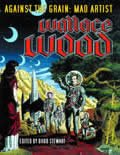
 When work on Against the Grain got underway in 1985, Fershid sent me some photocopies of Wally Wood art from his files. This included an odd, unlabeled inked drawing by Wood showing a man talking to a nude woman standing in front of his desk. Attached was a note from Fershid: "Woody rendered this panel on an EC page. Gaines didn't think it was funny. I don't know what story it's from. Do you?" It had a certain familiar feeling to it, and I began turning pages in Weird Science and Weird Science-Fantasy. It didn’t take more than a few minutes to spot it as identical to the layout and characters in panel six, page five of Wood's story "The Children" in Weird Science-Fantasy #23 (March, 1954), about the mutated children of space colonists.
 As discussed in past interviews, pranks at EC often involved hoax art never intended to be published. On several occasions, Wood brought in finished art with fake pasteovers on top of panels, calculated to surprise someone in the office and trigger a laugh. Interviewed in Bill Spicer's Graphic Story Magazine, Harry Harrison recalled, "We did two or three stories which gave us some laughs monkeying around with the artwork, mainly to relieve us from the boredom of having to illustrate lousy scripts. One was on a story called “Playtime Cowgirl” for an EC Western romance (Saddle Romances 11, March-April 1950). We brought the thing in originally with a big dong in the horse’s crotch, about four feet long, circumcised with crabs, real crabs and lobsters hanging from it, spider webs, Band-Aids all over it. Turned it in to Gaines, who loved it and kept it to show to his advertising man, Lyle Stuart. They showed it around; then forgot about it. Finally, it went to the engraver where they took black plates of it, then proofs, which got as far as the colorist, who was the one who caught it. ‘Mr. Gaines, isn’t this kind of a funny-looking horse?’ Gaines screamed to think it could get so close to going through. We just painted it out. They reshot the black plate, but it almost got by. Another one was also in the romance comics. They always had some title like ‘She Married a Man Who Gave Her No Love,’ which we changed to ‘She Married a Man With No Balls At All’ and pasted it over the real title. Stuck a lot of baseballs and footballs around the artwork, which could be peeled off. We’d sit around in the studio and think of ways to liven up the stories this way.”
 I stared at the page and the pasteover and realized this was a rare opportunity to see one of the long lost EC prank pages from decades earlier. With minimal effort I could reconstruct the way the panel looked in 1954. I went to a copy shop and sized the two elements to match. When I pasted them together, it was a perfect fit, requiring virtually no retouching, even though the background was different and the foreground figure was a silhouette in the original. So there it was: a restoration of the page as it appeared on the day Wood, anticipating hilarity, walked into the EC offices and pulled the finished inked story from his portfolio. I viewed this as a significant discovery, so the recreation page was included in the stack of artwork I wanted to include in Against the Grain.
 As designer Greg Sadowski and I worked on the book, we became aware of the full extent of censorship executed on both language and images by prudish publisher John Morrow. To his credit, Morrow far outstrips many publishers in accurate accountings and immediate payments to creators. But in terms of censorship, it was as though decades had never passed, leaving Morrow with a retro view akin to the attitudes of mid-century Midwestern small towns. I had agreed to the censorship because I wanted to see the book published after years of waiting. (Fantagraphics had originally commissioned the book but did not move to print it. When ten years passed, I asked them to return it to me.)
Greg was so surprised by the censorship that he did not even really believe it was true. Once he got past his initial disbelief, he was forced to go through the book, yank certain pictures and insert replacements. It seemed important, however, to retain the page from "The Children," but that would require masking parts from the panel. Should we use black bars? White bars? Greg's solution was simply to white out three spots on the figure.
In retrospect, I should have just deleted the entire page from the book, because the imposed restraints sabotaged the situation. The caption explained it was a restoration, but the alteration to remove body parts from a previous alteration left some readers scratching their heads in complete confusion. They read the caption, looked at the panel but were baffled by the image of a nude turned into a non-nude, a riddle wrapped in a paler shade of enigmatic whiteness.
So this Potrzebie presentation is aimed at banishing bewilderment with a comparison of the various elements: the original EC panel, the EC prank panel and the page from the past.
©2007 WMG and Wallace Wood Estate
 A native of India, Fershid Bharucha became a French citizen, notable as an artist, editor, translator and publisher in France, where he introduced Europeans to American artists in his USA Special magazine and also published hardcover French albums with comics by Will Eisner, Rand Holmes, Shary Flenniken, Mark Schultz, Bernie Wrightson and others. His own artwork was in early issues of the Hot Stuf ' and Bizarre Sex undergrounds. I came in contact with Fershid through a curious sequence of events.
When I learned that a graphic story I had scripted and packaged for Heavy Metal had been reprinted in Europe, I contacted Heavy Metal to get additional payment for myself and the artists involved. The rates at Heavy Metal were so high that I didn't expect any problem in getting a check for their resale. However, I was taken aback by the magazine's curious response, which came down to, "Prove it." Apparently this was because no records were kept when stacks of materials were shipped to France. It seemed pointless to get into an argument over such a matter, so playing by their rules, I wrote to Fershid who gladly sent me some copies of USA Special with the full-color story. I passed a copy along to Heavy Metal with a bill, and eventually we did get paid.
 When work on Against the Grain got underway in 1985, Fershid sent me some photocopies of Wally Wood art from his files. This included an odd, unlabeled inked drawing by Wood showing a man talking to a nude woman standing in front of his desk. Attached was a note from Fershid: "Woody rendered this panel on an EC page. Gaines didn't think it was funny. I don't know what story it's from. Do you?" It had a certain familiar feeling to it, and I began turning pages in Weird Science and Weird Science-Fantasy. It didn’t take more than a few minutes to spot it as identical to the layout and characters in panel six, page five of Wood's story "The Children" in Weird Science-Fantasy #23 (March, 1954), about the mutated children of space colonists.
 As discussed in past interviews, pranks at EC often involved hoax art never intended to be published. On several occasions, Wood brought in finished art with fake pasteovers on top of panels, calculated to surprise someone in the office and trigger a laugh. Interviewed in Bill Spicer's Graphic Story Magazine, Harry Harrison recalled, "We did two or three stories which gave us some laughs monkeying around with the artwork, mainly to relieve us from the boredom of having to illustrate lousy scripts. One was on a story called “Playtime Cowgirl” for an EC Western romance (Saddle Romances 11, March-April 1950). We brought the thing in originally with a big dong in the horse’s crotch, about four feet long, circumcised with crabs, real crabs and lobsters hanging from it, spider webs, Band-Aids all over it. Turned it in to Gaines, who loved it and kept it to show to his advertising man, Lyle Stuart. They showed it around; then forgot about it. Finally, it went to the engraver where they took black plates of it, then proofs, which got as far as the colorist, who was the one who caught it. ‘Mr. Gaines, isn’t this kind of a funny-looking horse?’ Gaines screamed to think it could get so close to going through. We just painted it out. They reshot the black plate, but it almost got by. Another one was also in the romance comics. They always had some title like ‘She Married a Man Who Gave Her No Love,’ which we changed to ‘She Married a Man With No Balls At All’ and pasted it over the real title. Stuck a lot of baseballs and footballs around the artwork, which could be peeled off. We’d sit around in the studio and think of ways to liven up the stories this way.”
 I stared at the page and the pasteover and realized this was a rare opportunity to see one of the long lost EC prank pages from decades earlier. With minimal effort I could reconstruct the way the panel looked in 1954. I went to a copy shop and sized the two elements to match. When I pasted them together, it was a perfect fit, requiring virtually no retouching, even though the background was different and the foreground figure was a silhouette in the original. So there it was: a restoration of the page as it appeared on the day Wood, anticipating hilarity, walked into the EC offices and pulled the finished inked story from his portfolio. I viewed this as a significant discovery, so the recreation page was included in the stack of artwork I wanted to include in Against the Grain.
 As designer Greg Sadowski and I worked on the book, we became aware of the full extent of censorship executed on both language and images by prudish publisher John Morrow. To his credit, Morrow far outstrips many publishers in accurate accountings and immediate payments to creators. But in terms of censorship, it was as though decades had never passed, leaving Morrow with a retro view akin to the attitudes of mid-century Midwestern small towns. I had agreed to the censorship because I wanted to see the book published after years of waiting. (Fantagraphics had originally commissioned the book but did not move to print it. When ten years passed, I asked them to return it to me.)
Greg was so surprised by the censorship that he did not even really believe it was true. Once he got past his initial disbelief, he was forced to go through the book, yank certain pictures and insert replacements. It seemed important, however, to retain the page from "The Children," but that would require masking parts from the panel. Should we use black bars? White bars? Greg's solution was simply to white out three spots on the figure.
In retrospect, I should have just deleted the entire page from the book, because the imposed restraints sabotaged the situation. The caption explained it was a restoration, but the alteration to remove body parts from a previous alteration left some readers scratching their heads in complete confusion. They read the caption, looked at the panel but were baffled by the image of a nude turned into a non-nude, a riddle wrapped in a paler shade of enigmatic whiteness.
So this Potrzebie presentation is aimed at banishing bewilderment with a comparison of the various elements: the original EC panel, the EC prank panel and the page from the past.
Labels: against the grain, bill gaines, ec, fershid, greg sadowski, harry harrison, heavy metal, lyle stuart, memoir, nudity, prank, severin, spicer, wood, wood chips
¶ 12:29 PM 0 comments