Potrzebie
Saturday, May 12, 2012

Popeye is ©2012 by King Features Syndicate

IDW received 11,569 preorders for Popeye #1 from comic retailers, prompting the company to print 13,400 copies. Those extra 2,000 copies quickly sold out, leading to a second print run.

The second issue is illustrated by Tom Neely with a cover by Langridge. Langridge described the cast: "Things are pretty much as you would expect if you know your Segar: Popeye loves Olive, Olive loves Popeye in her own fickle way, Popeye is a devoted stepfather to Swee'Pea, Wimpy's always looking for a free meal, etc. It ain't broke, so we ain't fixing it. Olive's brother Castor and their parents, Cole and Nana Oyl, are a part of the mix too. And you may spot Olive's first boyfriend, Ham Gravy, at some point, if you keep your eyes open. Other familiar faces will pop up as well. I've tried to get all of the regulars from the Segar years in there at some point, even if it's only a cameo."
In rave reviews, Ozella has been described as a "dead-ringer for Segar" and "a great storyteller". Pages seven and nine (below) reveal his working method and show slight changes and adjustments in some panels.


Bruce Ozella's Boston Common (2009)

Bruce Ozella
Labels: craig yoe, langridge, neely, ozella, popeye, segar
¶ 10:57 AM 1 comments
Friday, May 20, 2011


Popeye: The Great Comic Book Tales by Bud Sagendorf
Craig Yoe, editor and designer. Introduction by Jerry Beck. Yoe Books/IDW, $29.99 (176p) ISBN 978-1-60010-747-4
In the early 1930s, Bud Sagendorf’s sister worked in a Santa Monica art supply store where Popeye creator E.C. Segar bought his art materials. After she introduced the two, the 17-year-old Sagendorf soon had a job as Segar’s assistant on the Thimble Theatre comic strip.
For seven years, Sagendorf learned cartooning from the master. When Segar died in 1938, King Features inexplicably decided not to turn the strip over to Sagendorf. Instead, he was given a job laboring in the King Features bullpen.
In 1948, he began as the writer-artist of Dell’s Popeye comic books (a series he continued until 1962), and he took over the Thimble Theatre strip in 1959.
Craig Yoe notes that Sagendorf, in chalk talks and interviews, most often referred to his newspaper strip: “He rarely talked of his comic book work. Comic strips were Big Time. They had prestige and sometimes even financial reward. Comic books were low-rent, thought of as ‘only’ a kid’s medium, even greatly looked down on in some circles. But the comic books were a great artistic medium for Bud.”
Yoe offers nine color stories that were published between 1948 and 1957 with “a plethora of Popeye twister-sock punches, punchy art, and punch lines.” Yes, plenty of punches are thrown, including Popeye’s rotating “twisker-sock”. “Interplanetary Battle” (1952) pits Popeye against Jetoe, a shape-shifting Martian. “Shrink Weed” (1953), a wild adventure in which Popeye and Swee’pea are miniaturized and used for fish bait, was written a year after Mary Norton’s The Borrowers was first published, and it reads like a satire of Norton’s tiny family. In “The Happy Little Island” (1954) Popeye outwits the underground Dismal Demons who have caused happy islanders to become sad islanders. It’s evident that Sagendorf loved to create imaginative premises and see how Popeye, Wimpy, Olive Oyl and others would deal with the strange situations. It’s fun to go along on these fanciful flights, flowing easily from panel to panel.

As he has done with his other books, Yoe presents a fascinating selection of photos, memorabilia and relevant images, such as Sagendorf-inspired Popeye paintings by Roy Lichtenstein and Andy Warhol. There’s a 1938 Sagendorf cartoon from Popular Photography, an autographed flier from the 1977 installation of the Popeye statue in Segar’s birthplace, Chester, Illinois, and an “extremely rare” 16-page comic book Sagendorf drew for the Red Cross in 1946.

Sagendorf’s life journey took him from Wenatchee, Washington, to Santa Monica to Manhattan to rural Connecticut to Florida. Bill Pearson, who wrote Popeye comic books after Sagendorf retired, recalled meeting him in Connecticut: “What a genius!... Sagendorf’s comic books were classics, completely his own, with a fascinating unique environment for the cast. He would fashion long, convoluted plots, with Popeye lost in strange places for pages, ruminating about his fate and the fate of the universe. Brilliant stream-of-consciousness tales, with plenty of action and suspense, and clever, silly cartooning that carried it all beautifully.”
Reading just a single story confirms that Pearson’s description is apt. Oddly, the National Cartoonists Society never gave Sagendorf any kind of award. They could make up for that shameful oversight by giving an award to Craig Yoe for delivering this attractive, eye-popping Popeye package.

Bud Sagendorf, at age 23, drawing the
Popular Photography cartoon seen above.
Popular Photography cartoon seen above.
Labels: bill pearson, craig yoe, popeye, sagendorf, segar
¶ 11:28 AM 0 comments
Friday, May 06, 2011
Go Yoe @ Yoe Books

Barney Google: Gambling, Horse Races & High-Toned Women
Billy DeBeck, edited and designed by Craig Yoe, foreword by Richard Thompson. Yoe Books/IDW, $39.99 (248p) ISBN 978-1600106705
 Craig Yoe does it again. His beautifully designed Barney Google presents nine months of Billy DeBeck’s daily strips from 1922, the memorable story sequence in which the racehorse Spark Plug was introduced. As one turns pages, Yoe’s brilliant skill as a designer, historian and visual editor becomes more and more evident, and it soon becomes apparent that he has planned this book like a race, taking the readers for a fast spin around the track. The front cover image, showing Barney atop Spark Plug, is from the cover of the rare Circulation magazine. With different coloring, this is the same drawing seen on the sheet music of the 1923 song hit “Barney Google (with the Goo-Goo-Googly Eyes)” by Billy Rose. The Spark Plug stories and the song catapulted DeBeck to fame.
“And they’re off!” The book opens to a huge full-color endpaper image of a reluctant Spark Plug on the day of a race, followed by pages showing the start of the race and a striking 1932 pencil original by DeBeck. The title page is curiously absent the book’s catchy subtitle (which means it will never appear in some listings and reviews). However, it displays another stunning color cartoon spread across two pages. The inventive syndicated strip cartoonist Richard Thompson (Cul de Sac, Richard’s Poor Almanac) contributes a hand-lettered foreword, “Barney Google and the Bigfoot Style” with cartoon illustrations “after DeBeck”.
 “The race is on!” Following that extended display, the book finally gets underway at long last with Yoe’s essay, “Google This!”, tracking DeBeck’s rise to riches and analyzing the appeal of his character: “He became a squat runt, maybe because he suffered the blow delivered by the very world he schemed to beat. Barney started as a Mutt and ended as a Jeff… The new diminutive stature was certainly responsible for much of Barney’s appeal, a weird kind of appeal. Barney was rogue, sometimes a scoundrel, for sure a philanderer, and the ASPCA frowned upon horse kickers. But like lovable loser Homer Simpson or pilfering pirate Captain Jack Sparrow, we like and are rooting for Bad Boy Barney.”
“Spark Plug takes the lead!” DeBeck springs to life in Yoe’s profile of the cartoonist, contrasting night life fun with drawing board desperation: “In New York, DeBeck partied hard as he and his pals didn’t believe in Prohibition, and the cartoonist had trouble keeping up with deadlines. The story goes that his frustrated editor locked DeBeck up without his pants in a hotel room, so he couldn’t escape until he caught up with his work.”
 “Hi Yoe, silver!” DeBeck died in 1942, and four years later, the National Cartoonists Society was organized. Yoe recounts how DeBeck’s widow, Mary (who remarried as Mary Bergman), stepped in and said she would provide the prize for an annual award if it were in the name of her late husband. The award was a silver cigarette case engraved with DeBeck’s characters. Thus, the Barney Award was launched, but the selection was by a committee of one. Milton Caniff recalled, “Mrs. DeBeck arbitrarily decided who would win. I’ve never talked with anyone who was consulted about it… She just made the choice and presented the award and that was that.” An interesting angle, but Yoe missed the punchline, the strange story of how the NCS pulled the ol' switcheroo to deny DeBeck lasting fame: On February 14, 1953, Mary Bergman was flying from Tampa to New Orleans in a National Airlines DC-6 when a thunderstorm sent the plane plummeting into the Gulf of Mexico, where it broke in half. Even as the last bodies, bubbles and debris surfaced from the ocean floor, the National Cartoonists Society had already submerged the Barney, replacing it with the Reuben (named for Rube Goldberg, the first NCS president). To freeze the NCS’ instantaneous revisionist history, the 1946-53 winners were all given Reuben statuettes and designated as Reuben winners rather than Barney winners.
“Heading for the homestretch!” After a rundown of films, animation, books and comic book reprints, Yoe offers “A Billy DeBeck Scrapbook”, a savory salmagundi of sheet music, advertisements, Cupples & Leon books and promotional images. Further insight into the cartoonist’s lifestyle is seen in the many photos of DeBeck drawing cartoons, playing golf and living it up with his celebrity pals. Racing into the homestretch, Spark Plug is shown galloping into glory in the final color endpaper spread.
“The winner’s circle!” Yoe has succeeded in recapturing the golden era when the leading syndicated cartoonists lived like kings. With comic strip champions Woody Gelman and Bill Blackbeard receding into the past, Yoe has picked up the torch, illuminating panels and pages. His fine flair for creative design has propelled him into the designer pantheon as the Milton Glaser of comics, and this book is such a scintillating, splendiferous delight that one closes it eager to dive headfirst into Yoe’s other IDW titles.


Barney Google: Gambling, Horse Races & High-Toned Women
Billy DeBeck, edited and designed by Craig Yoe, foreword by Richard Thompson. Yoe Books/IDW, $39.99 (248p) ISBN 978-1600106705

“And they’re off!” The book opens to a huge full-color endpaper image of a reluctant Spark Plug on the day of a race, followed by pages showing the start of the race and a striking 1932 pencil original by DeBeck. The title page is curiously absent the book’s catchy subtitle (which means it will never appear in some listings and reviews). However, it displays another stunning color cartoon spread across two pages. The inventive syndicated strip cartoonist Richard Thompson (Cul de Sac, Richard’s Poor Almanac) contributes a hand-lettered foreword, “Barney Google and the Bigfoot Style” with cartoon illustrations “after DeBeck”.

“Spark Plug takes the lead!” DeBeck springs to life in Yoe’s profile of the cartoonist, contrasting night life fun with drawing board desperation: “In New York, DeBeck partied hard as he and his pals didn’t believe in Prohibition, and the cartoonist had trouble keeping up with deadlines. The story goes that his frustrated editor locked DeBeck up without his pants in a hotel room, so he couldn’t escape until he caught up with his work.”

“Heading for the homestretch!” After a rundown of films, animation, books and comic book reprints, Yoe offers “A Billy DeBeck Scrapbook”, a savory salmagundi of sheet music, advertisements, Cupples & Leon books and promotional images. Further insight into the cartoonist’s lifestyle is seen in the many photos of DeBeck drawing cartoons, playing golf and living it up with his celebrity pals. Racing into the homestretch, Spark Plug is shown galloping into glory in the final color endpaper spread.
“The winner’s circle!” Yoe has succeeded in recapturing the golden era when the leading syndicated cartoonists lived like kings. With comic strip champions Woody Gelman and Bill Blackbeard receding into the past, Yoe has picked up the torch, illuminating panels and pages. His fine flair for creative design has propelled him into the designer pantheon as the Milton Glaser of comics, and this book is such a scintillating, splendiferous delight that one closes it eager to dive headfirst into Yoe’s other IDW titles.

July 17, 1922
Labels: barney google, billy debeck, craig yoe, idw, milton glaser, spark plug, yoe books
¶ 3:13 PM 1 comments
Monday, July 05, 2010
Death of Newspapers #16: More Barney Google Sunday pages from 1926
.

Craig Yoe's 224-page Barney Google collection is scheduled for publication next month by IDW Publishing. In addition to the strips, it features a visual intro by Richard Thompson and "rare unpublished art, photos and ephemera in glorious color." Click here to see IDW's previous Yoe Books.
Michael Dooley's interview with Craig Yoe.
Thanks to the great scans of Roger Langridge, here's our latest Barney batch, picking up where we left off in February with the October 24, 1926 page. This group takes us to the end of 1926 and raises the question: Did Amos 'n' Andy get the phrase "Holy Mackerel!" from Billy DeBeck? Amos 'n' Andy didn't begin on radio until March 19, 1928, but Freeman Gosden and Charles Correll did broadcast their earlier Sam 'n' Henry beginning January 12, 1926. Abba dabba wu!


Craig Yoe's 224-page Barney Google collection is scheduled for publication next month by IDW Publishing. In addition to the strips, it features a visual intro by Richard Thompson and "rare unpublished art, photos and ephemera in glorious color." Click here to see IDW's previous Yoe Books.
Michael Dooley's interview with Craig Yoe.
Thanks to the great scans of Roger Langridge, here's our latest Barney batch, picking up where we left off in February with the October 24, 1926 page. This group takes us to the end of 1926 and raises the question: Did Amos 'n' Andy get the phrase "Holy Mackerel!" from Billy DeBeck? Amos 'n' Andy didn't begin on radio until March 19, 1928, but Freeman Gosden and Charles Correll did broadcast their earlier Sam 'n' Henry beginning January 12, 1926. Abba dabba wu!
December 26, 1926

December 19, 1926

December 12, 1926

December 5, 1926

November 28, 1926

November 21, 1926

November 14, 1926

November 7, 1926

October 31, 1926

Labels: amos 'n' andy, barney google, billy debeck, craig yoe, death of newspapers, idw
¶ 1:17 PM 0 comments
Sunday, May 09, 2010
Wood Chips 18: Goody Bumpkin

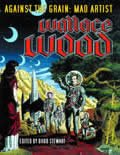
This is Wally Wood's Goody Bumpkin from Wham-O Giant Comics (April, 1967). We published the story in black and white in Against the Grain. The 52-page Wham-O measured 14" wide and 21" high with 1500 panels used to tell 24 stories. As evident below, the coloring was not very appealing.
Craig Yoe just reprinted Goody Bumpkin in his Golden Treasury of Klassic Krazy Kool Kids Komics (IDW, 2010).


This is Wally Wood's Goody Bumpkin from Wham-O Giant Comics (April, 1967). We published the story in black and white in Against the Grain. The 52-page Wham-O measured 14" wide and 21" high with 1500 panels used to tell 24 stories. As evident below, the coloring was not very appealing.
Craig Yoe just reprinted Goody Bumpkin in his Golden Treasury of Klassic Krazy Kool Kids Komics (IDW, 2010).


Labels: craig yoe, goody bumpkin, idw, wham-o, wood, wood chips
¶ 2:43 PM 0 comments