Potrzebie
Monday, June 21, 2010
Read me, Dr. Memory

Listen to the Firesign Theatre's I Think We're All Bozos on This Bus (1971)
Also listen to The Firesign Theatre Radio Hour Hour
The Firesign's first self-hosted radio series was The Firesign Theatre Radio Hour Hour, a two-hour weekly show that aired Sunday nights on KPPC-FM, Pasadena, from January to July 1970. Between September 1970 and February 1971, Firesign hosted the weekly series Dear Friends on KPFK-FM, Los Angeles. Their last self-hosted radio series was Let's Eat, broadcast weekly on KPFK between November 1971 and February 1972, plus the 90-minute series finale Martian Space Party in March 1972.
Firezine
Radio Free Oz
Firesign on WFMU
Norman Bel Geddes' Futurama (1939 World's Fair)
I Think We're All Bozos on This Bus (1971) remains their masterwork, a stereo spin-off cyber-springboarding from the Hall of Science at the 1933 Chicago World's Fair, Norman Bel Geddes' Futurama at the 1939 World's Fair and Disneyland. Here's an excerpt from Phil Austin's explanatory essay:
Bozos is the last of the four classic albums of the early Firesign Theatre and was written and recorded in 1971. It might be thought of as the first of our consciously Science Fiction pieces and although it attempts to span some time/space barriers, it exists primarily in a world just out of sight, in a future that seems to be just around the corner. At the height - so it would turn out - of our fame, interviewed and taken seriously for the first time, we felt ourselves under unusual scrutiny and pressure for the first time since Columbia had nearly dropped us just before we recorded our second album, How Can You Be In Two Places At Once, When You're Not Anywhere At All. (Available from Mobile Fidelity on Compact Disc:MFCD 834.)
We had tentatively settled upon a form that was to be reminiscent of the old Bozo the Clown children's records of the Forties and early Fifties. We did not fulfill that dream, with its musical page-turnings and breezy narration, but the idea of a Bozo certainly survived. The strain of the process of writing can be felt in the long, digressive opening which takes up almost all of Side One on the original, vinyl album. In it, a scientific and religious system that rules the Future is sketched in a number of impressions that are satires of the kind of script-writing for animated dummies that you hear and see at Disneyland. Clem, the main character of the piece, is only rarely heard and his motivations are maddeningly secret. This was a far cry from Don't Crush That Dwarf, Hand Me The Pliers - our third album - (also available from Mobile Fidelity on Compact Disc: MFCD 880) which immediately preceded this one, replete with complex characters and interwoven stories and media satires. Luckily, Bozos was an immediate success and has always been a favorite with a substantial portion of our listeners, especially those interested in science and Science Fiction.
The story is very concerned with computers although it was written in a time some years before the general availability of the Personal Computer. We drew a good deal of inspiration from the now-famous Eliza Program, an early attempt to elicit the questions and responses of a psychiatrist from a computer.
Bozos is also very much about the phenomenon of someone who can "Live in the future, now!" as the first voices of the fair tell Clem. Prescience and prediction of the future and the peculiar traps of fortune-telling are what this story is about. Clem is not who he seems, neither is Barney. (Much of our thinking about the future was conditioned by a mutual fascination for the history of the New York and Chicago World's Fairs and their exhibits about the future, in the General Motors pavilion in New York, or the Surreal, as in the Salvador Dali building at Chicago. But it is Wait Disney and Disneyland's peculiar slant on education that inspires most of what we will hear in the first half of the story.)
The first voice of the future is that of someone in the distance, over a loudspeaker, saying "... biting through, in this area." This reflects the throw of the I Ching coins, tossed by us upon beginning and ending any album in a process that by now was increasingly superstitious and not wholly inspirational. We had already been through a bitter but private breakup and had reformed. And the tumultuous social and political events of the early Seventies were mirrored on our own lives by the tragic deaths of two of our intimate associates, Jerry (Wacko) Brian and David Grimm. Circling whatever this idea was to be, like wolves under pressure, we had begun to think about the Future.
A man named Clem goes into the Future Fair by associating himself with a happy group of spectators called B.O.Z.O.s (Brotherhood of Zips and Others) whose mission in life seems to be to get together and do things together in a state we characterized as "mindless fellowship." He hooks up with a Bozo named Barney, who doesn't like to "clone alone." In the background, we can hear the receding sound of the ice cream wagon that is being chased by George Tirebiter at the end of "Dwarf." We hear a bus equipped with loudspeakers through which speak the voice that is "biting through." As it pulls to a stop at the station on Dutch Elm Street, we hear the voice of Clem. Practically the first thing he says is "Holy Fudd!" Science is God in the world of the future and Sir Sidney Fudd is His prophet and we will soon learn why.
Several lovable, life-size holograms leap from the bus and entertain and usher the passengers on board. They are large cowboy vegetables, evidently so familiar to everyone as to need no introduction and they sing of Another World, the Shadows:
"We're back from the Shadows again
Out where an In-jun's your friend
Where the vegetables are green
And you can pee right into the stream."
They seem to hearken back to some idyllic American time when no environmental conscience was needed and in which no Indian would have a discouraging word about his treatment, some slap-happy, Disney-like approximation of a shared longing for an imaginary past seen from the vantage of an imperfect present. Even when they quarrel - which is frequently - they tell each other something that will come to be a byword of our journey, that fighting is "out of style." Although there are evidences, here and there, that the real world is not free of fighting, (particularly in Hideo Knutt's Boltadrome, a mobile carnival of violence that must attract a more rowdy, sideshow crowd) it is clear that Whoever has programmed this future does not want its inhabitants to fight one another.
Once inside the bus, the ride to the future itself is accomplished by surrounding simulation screens and disembodied voices that trick the innocent Bozos into thinking that they are actually flying. Since they got on a bus, what must happen is that the bus simply drives to the site of the Fair, but they believe ("Do you suppose that was simulated?" askes Barney) what they see and hear much as we had been believing what we saw on TV in those end-of-Vietnam and beginning-of-Watergate times.
We are introduced to the rubber lines, moving colored walkways that transport visitors in the Future Fair. We learn incidentally that the Bozos - and presumably nearly everyone else in this world - wear wigs that must be locked down in flight and inflatable shoes that can walk on water. Clem, it seems, gave up all shoes years ago. By now, any serious Firesign Theatre listener knows that "taking off your shoes" serves us as an analogy for childhood itself and its attendant dreams of freedom. Clem's ambivalence and rootlessness project the image of a slightly bored and pleasantly childlike person with nothing much to do. In fact, he is something quite different but we will not learn the truth until the very end. The Bozos are a self-satisfied, cheerful lot, especially in the person of their "Chairman" Barney, (is this some implication that the Bozos are, in fact, communists or at the very least Maoists, somehow integrated into a capitalist world of the future? Hmmmm. If so, it's a cheerful, middle-class kind of Maosim and an interesting prediction in itself when set against the tumultuous events in the Eastern Europe of the early Nineties.)
The simulation that begins to surround Clem and Barney already shows the wearing and cracking of age and repetition. The scientific "knowledge" that is displayed is addled and mixed in strange ways, as if truth were less important than entertainment and entertainment meant to manipulate its audience by drawing on such basics as fear of the night, fear of science and fear of knowledge itself. As Clem rather aimlessly gets on the Yellow Rubber Line which will lead him to an exhibit called the Wall of Science, he seems to be just killing time, just letting the random events of the Fair move him in any old direction.
The Path of Science that leads to the Wall of Science is a recreation of popular myth of the social and intellectual development of Man. First we hear a kind of portentous telling of primitive Myth, the story of the Turtle and his Mother, a kind of arboreal, incestuous mixing of species and genera which produces a mythic figure, the walking Catfish, so human and so male that he carries two enormous testicles which are also the Sun and the Moon of our terrestrial world. This myth is roundly ridiculed as primitive naturism and is quickly replaced by animatronic scenes which detail the comfortable, self-satisfied view of Mankind that places scientific knowledge at the top of a pyramidal view of history and Man at the top of the Ladder of Progress. Full of his new-found power, Man drops a great fecal load of knowledge over the earth to fertilize it and make it grow.
The idiotic antics Of Sir Sidney Fudd, who by knocking a woman over invents the basic principle on which this civilization seems built - that "if you push something hard enough, it will fall over" - and the equally adolescent version of the invention of Technology by Tom Teslacle and Dick Beddoes that follows, would convince any Bozo that Science has solved the problems of the Present and has led us to a happy Future, wherein we may interact with a simulated President who seems to exist in a Model Government of the Future, both of them wholly dependent on electricity and cocaine (or do you think that the little boxcars are filled with industrial sugar water? Don't be naive.) Cocaine and electricity are the life's blood of the Bureau of Western Mythology, controlled by Chester Cadaver and presided over by President Springhead himself. It is one great system, fed by nonsense knowledge and skewed mimicry of nature which has resulted in this Future Fair.
(There is a temptation by some writers about the Firesign Theatre to look for some systematic political metaphor in this Path of Science and while it is true that we most often use electricity and power interchangeably and that a good deal of our work qualifies as social satire, it is equally interesting to examine the biological aspects that seem most superficial; the simple sexual ones. The primitive confusions of the Turtle and his Mother and the Catfish are all concerned with procreation and, by extension, evolution. Fudd's Law and Teslacle's deviant, although both are childish male adolescent ways of viewing sex, still are a good enough imitation of unruly Nature to lead to a kind of Frankensteinian Pushover Machine (called, presumably, "Nancy") that produces electricity through some mechanical sex act or another.)
Man, still without shoes, still living a dream of adolescent freedom, only divines the world around him from his own limited experience, entirely male. He sees the sun and the moon as is own testicles and he sees the power that issues therefrom to be capable of taming and controlling an unruly and presumably dangerously feminine world. It may not be Science as we know it, but it's good enough for the Future Fair.
1964 World's Fair Futurama II
The Firesign FAQ probes the origin of Dr. Memory:


l to r: Phil Proctor, Phil Austin, Peter Bergman, David Ossman

Listen to the Firesign Theatre's I Think We're All Bozos on This Bus (1971)
Also listen to The Firesign Theatre Radio Hour Hour
The Firesign's first self-hosted radio series was The Firesign Theatre Radio Hour Hour, a two-hour weekly show that aired Sunday nights on KPPC-FM, Pasadena, from January to July 1970. Between September 1970 and February 1971, Firesign hosted the weekly series Dear Friends on KPFK-FM, Los Angeles. Their last self-hosted radio series was Let's Eat, broadcast weekly on KPFK between November 1971 and February 1972, plus the 90-minute series finale Martian Space Party in March 1972.
Denny Zartman's 1999 Interview with Philip Proctor and David Ossman
Firezine
Radio Free Oz
Firesign on WFMU
Norman Bel Geddes' Futurama (1939 World's Fair)
I Think We're All Bozos on This Bus (1971) remains their masterwork, a stereo spin-off cyber-springboarding from the Hall of Science at the 1933 Chicago World's Fair, Norman Bel Geddes' Futurama at the 1939 World's Fair and Disneyland. Here's an excerpt from Phil Austin's explanatory essay:
Bozos is the last of the four classic albums of the early Firesign Theatre and was written and recorded in 1971. It might be thought of as the first of our consciously Science Fiction pieces and although it attempts to span some time/space barriers, it exists primarily in a world just out of sight, in a future that seems to be just around the corner. At the height - so it would turn out - of our fame, interviewed and taken seriously for the first time, we felt ourselves under unusual scrutiny and pressure for the first time since Columbia had nearly dropped us just before we recorded our second album, How Can You Be In Two Places At Once, When You're Not Anywhere At All. (Available from Mobile Fidelity on Compact Disc:MFCD 834.)
We had tentatively settled upon a form that was to be reminiscent of the old Bozo the Clown children's records of the Forties and early Fifties. We did not fulfill that dream, with its musical page-turnings and breezy narration, but the idea of a Bozo certainly survived. The strain of the process of writing can be felt in the long, digressive opening which takes up almost all of Side One on the original, vinyl album. In it, a scientific and religious system that rules the Future is sketched in a number of impressions that are satires of the kind of script-writing for animated dummies that you hear and see at Disneyland. Clem, the main character of the piece, is only rarely heard and his motivations are maddeningly secret. This was a far cry from Don't Crush That Dwarf, Hand Me The Pliers - our third album - (also available from Mobile Fidelity on Compact Disc: MFCD 880) which immediately preceded this one, replete with complex characters and interwoven stories and media satires. Luckily, Bozos was an immediate success and has always been a favorite with a substantial portion of our listeners, especially those interested in science and Science Fiction.
The story is very concerned with computers although it was written in a time some years before the general availability of the Personal Computer. We drew a good deal of inspiration from the now-famous Eliza Program, an early attempt to elicit the questions and responses of a psychiatrist from a computer.
Bozos is also very much about the phenomenon of someone who can "Live in the future, now!" as the first voices of the fair tell Clem. Prescience and prediction of the future and the peculiar traps of fortune-telling are what this story is about. Clem is not who he seems, neither is Barney. (Much of our thinking about the future was conditioned by a mutual fascination for the history of the New York and Chicago World's Fairs and their exhibits about the future, in the General Motors pavilion in New York, or the Surreal, as in the Salvador Dali building at Chicago. But it is Wait Disney and Disneyland's peculiar slant on education that inspires most of what we will hear in the first half of the story.)
The first voice of the future is that of someone in the distance, over a loudspeaker, saying "... biting through, in this area." This reflects the throw of the I Ching coins, tossed by us upon beginning and ending any album in a process that by now was increasingly superstitious and not wholly inspirational. We had already been through a bitter but private breakup and had reformed. And the tumultuous social and political events of the early Seventies were mirrored on our own lives by the tragic deaths of two of our intimate associates, Jerry (Wacko) Brian and David Grimm. Circling whatever this idea was to be, like wolves under pressure, we had begun to think about the Future.
A man named Clem goes into the Future Fair by associating himself with a happy group of spectators called B.O.Z.O.s (Brotherhood of Zips and Others) whose mission in life seems to be to get together and do things together in a state we characterized as "mindless fellowship." He hooks up with a Bozo named Barney, who doesn't like to "clone alone." In the background, we can hear the receding sound of the ice cream wagon that is being chased by George Tirebiter at the end of "Dwarf." We hear a bus equipped with loudspeakers through which speak the voice that is "biting through." As it pulls to a stop at the station on Dutch Elm Street, we hear the voice of Clem. Practically the first thing he says is "Holy Fudd!" Science is God in the world of the future and Sir Sidney Fudd is His prophet and we will soon learn why.
Several lovable, life-size holograms leap from the bus and entertain and usher the passengers on board. They are large cowboy vegetables, evidently so familiar to everyone as to need no introduction and they sing of Another World, the Shadows:
"We're back from the Shadows again
Out where an In-jun's your friend
Where the vegetables are green
And you can pee right into the stream."
They seem to hearken back to some idyllic American time when no environmental conscience was needed and in which no Indian would have a discouraging word about his treatment, some slap-happy, Disney-like approximation of a shared longing for an imaginary past seen from the vantage of an imperfect present. Even when they quarrel - which is frequently - they tell each other something that will come to be a byword of our journey, that fighting is "out of style." Although there are evidences, here and there, that the real world is not free of fighting, (particularly in Hideo Knutt's Boltadrome, a mobile carnival of violence that must attract a more rowdy, sideshow crowd) it is clear that Whoever has programmed this future does not want its inhabitants to fight one another.
Once inside the bus, the ride to the future itself is accomplished by surrounding simulation screens and disembodied voices that trick the innocent Bozos into thinking that they are actually flying. Since they got on a bus, what must happen is that the bus simply drives to the site of the Fair, but they believe ("Do you suppose that was simulated?" askes Barney) what they see and hear much as we had been believing what we saw on TV in those end-of-Vietnam and beginning-of-Watergate times.
We are introduced to the rubber lines, moving colored walkways that transport visitors in the Future Fair. We learn incidentally that the Bozos - and presumably nearly everyone else in this world - wear wigs that must be locked down in flight and inflatable shoes that can walk on water. Clem, it seems, gave up all shoes years ago. By now, any serious Firesign Theatre listener knows that "taking off your shoes" serves us as an analogy for childhood itself and its attendant dreams of freedom. Clem's ambivalence and rootlessness project the image of a slightly bored and pleasantly childlike person with nothing much to do. In fact, he is something quite different but we will not learn the truth until the very end. The Bozos are a self-satisfied, cheerful lot, especially in the person of their "Chairman" Barney, (is this some implication that the Bozos are, in fact, communists or at the very least Maoists, somehow integrated into a capitalist world of the future? Hmmmm. If so, it's a cheerful, middle-class kind of Maosim and an interesting prediction in itself when set against the tumultuous events in the Eastern Europe of the early Nineties.)
The simulation that begins to surround Clem and Barney already shows the wearing and cracking of age and repetition. The scientific "knowledge" that is displayed is addled and mixed in strange ways, as if truth were less important than entertainment and entertainment meant to manipulate its audience by drawing on such basics as fear of the night, fear of science and fear of knowledge itself. As Clem rather aimlessly gets on the Yellow Rubber Line which will lead him to an exhibit called the Wall of Science, he seems to be just killing time, just letting the random events of the Fair move him in any old direction.
The Path of Science that leads to the Wall of Science is a recreation of popular myth of the social and intellectual development of Man. First we hear a kind of portentous telling of primitive Myth, the story of the Turtle and his Mother, a kind of arboreal, incestuous mixing of species and genera which produces a mythic figure, the walking Catfish, so human and so male that he carries two enormous testicles which are also the Sun and the Moon of our terrestrial world. This myth is roundly ridiculed as primitive naturism and is quickly replaced by animatronic scenes which detail the comfortable, self-satisfied view of Mankind that places scientific knowledge at the top of a pyramidal view of history and Man at the top of the Ladder of Progress. Full of his new-found power, Man drops a great fecal load of knowledge over the earth to fertilize it and make it grow.
The idiotic antics Of Sir Sidney Fudd, who by knocking a woman over invents the basic principle on which this civilization seems built - that "if you push something hard enough, it will fall over" - and the equally adolescent version of the invention of Technology by Tom Teslacle and Dick Beddoes that follows, would convince any Bozo that Science has solved the problems of the Present and has led us to a happy Future, wherein we may interact with a simulated President who seems to exist in a Model Government of the Future, both of them wholly dependent on electricity and cocaine (or do you think that the little boxcars are filled with industrial sugar water? Don't be naive.) Cocaine and electricity are the life's blood of the Bureau of Western Mythology, controlled by Chester Cadaver and presided over by President Springhead himself. It is one great system, fed by nonsense knowledge and skewed mimicry of nature which has resulted in this Future Fair.
(There is a temptation by some writers about the Firesign Theatre to look for some systematic political metaphor in this Path of Science and while it is true that we most often use electricity and power interchangeably and that a good deal of our work qualifies as social satire, it is equally interesting to examine the biological aspects that seem most superficial; the simple sexual ones. The primitive confusions of the Turtle and his Mother and the Catfish are all concerned with procreation and, by extension, evolution. Fudd's Law and Teslacle's deviant, although both are childish male adolescent ways of viewing sex, still are a good enough imitation of unruly Nature to lead to a kind of Frankensteinian Pushover Machine (called, presumably, "Nancy") that produces electricity through some mechanical sex act or another.)
Man, still without shoes, still living a dream of adolescent freedom, only divines the world around him from his own limited experience, entirely male. He sees the sun and the moon as is own testicles and he sees the power that issues therefrom to be capable of taming and controlling an unruly and presumably dangerously feminine world. It may not be Science as we know it, but it's good enough for the Future Fair.
-- Phil Austin
1964 World's Fair Futurama II
The Firesign FAQ probes the origin of Dr. Memory:
"SYSTAT UPTIME 9:01 unhappy READ MAKNAM"
and "hmmm..."

Dr. Memory is based on an early "Eliza" type psychiatrist program
that ran on a PDP-10. The consensus of the alt.comedy.firesgn-thtre
newsgroup experts is that this program was written in (((((Lisp))))),
and compiled using the SAILON LISP compiler for the DECSystem10,
running TOPS-10 operating system. Tim Rentsch noted that one of these
systems was installed at Caltech, and that a former classmate of his
demonstrated the program for the FT .

There is much evidence that David Ossman attended Claremont McKenna College
(then "Claremont Men's College") in his younger days, at which there was one
of the first implementations of the Doctor.

Tim Brengle writes of the implementation:

"CMC is one of the Claremont Colleges, along with Harvey Mudd College,
Scripps College for Women, Pomona College, and Pitzer College.  Five schools
taking up a total of about one square mile.  The hot new shared computing
resource was a PDP-10 model KA-10 (with 256K bytes of *CORE* memory, and a
swapping drum) running Tops-10.  This was the same type of machine upon which
Weisenbaum created the original DOCTOR program, one of whose scripts was
called "Eliza".  The program, at least the version I hacked on, was written
in Stanford LISP 1.6--which did have a pretty awesome compiler..."

The evidence for these detailed descriptions of Dr. Memory are based
on the contents of Dr. Memory's commands and error statements:

For example, "SYSTAT" was a TOPS-10 command that gave the system
status, and "UPTIME" showed how long the system had been running.

In addition, the hero (P.) of the story identifies himself as "worker"
whenever he wanted to access the internals of the computerized fair; ("This
is Worker Speaking, Hello"). It is highly likely that David Ossman saw DOCTOR
on the Claremont PDP-10.  The way that one started the program was to
activate the LISP environment and then execute the form:

 (worker hello)

Up until executing that function, you had to enclose everything in () just as
one would expect from LISP.  But the WORKER function changed the syntax
tables for the parser so that a double carriage-return delimited your
statements and told the DOCTOR that it was time to reply. But, there was a
bug in DOCTOR, forgetting to take into account that dots have special meaning
in LISP.  Putting one in the wrong place confused the LISP function MAKNAM
("make name") which was trying to assemble characters into tokens. It
returned its error message to the top-level reading function (READ). It's
error message was, of course, "READ: UNHAPPY MAKNAM".

Labels: austin, bergman, disneyland, firesign, norman bel geddes, ossman, proctor
¶ 2:38 AM 2 comments
Friday, October 21, 2005
Meanwhile, back at the ranch...
Before Len Brown became an Austin country music DJ, his country roots involved him in the creation of a well-remembered comic book series of the 1960s:
No matter how I struggle and strive,
I'll never get out of this world alive.
--Hank Williams
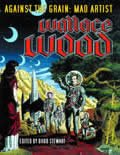
Country and Western music provides a strange springboard into the world of T.H.U.N.D.E.R. Agents. Yet today, the sounds of C&W still reverberate and echo in the distance when one traces the origin of Wallace Wood's science fictional characters back to producer Nat Levine's The Phantom Empire (1935). Elements of this 12-chapter Mascot serial were an influence during the mid-1960s creation of T.H.U.N.D.E.R. Agents. The serial featured the galloping Thunder Riders, mysterious helmeted horsemen from the "Scientific City of Murania."
Concocted during a nitrous oxide dental dream by sedated screenwriter Wallace MacDonald (1891-1978), The Phantom Empire starred Gene Autry (1907-1998), touted in the opening credits as "Radio's Singing Cowboy." Menaced by the Thunder Riders, Gene discovers the futuristic Muranian civilization beneath his Radio Ranch. MacDonald's story is a bizarre salmagundi of science fiction, musical and Western, a high-tech horse opera spiced with adventure, comedy, cowboy songs and flame-throwing robots wearing tin hats. Riding in the desert, teenagers Frankie (Frankie Darro) and Betsy Baxter (Betsy Ross King) also encounter the Thunder Riders. Reenacting the event while wearing old buckets as headgear, Frankie and Betsy organize their own group, the Junior Thunder Riders, as a kids club. The success of The Phantom Empire spurred Autry's career, and the serial chapters were later re-edited into a 70-minute feature, Men with Steel Faces (1940).
Detouring down another rural route with this country connection, the focus shifts to Brooklyn-born Len Brown, a C&W disc jockey who today spins classic country tunes Tuesday mornings over KOOP 91.7 FM in Dripping Springs, Texas. Growing up in Brooklyn in the 1940s and 1950s, he listened to mountain music, the Western swing of Bob Wills, the fatalistic songs of Hank Williams and a variety of honkytonk hellraisers. In the early 1950s, when The Phantom Empire was re-released theatrically and also seen on television, it made an indelible impression on the young Len Brown, who especially liked the Thunder Riders, sent forth by Murania's evil Queen Tika (Dorothy Christy).
Meanwhile, back at the ranch, Wally Wood's life and career had splintered into a dozen different directions after the glory days of EC. Like Len Brown, Wood also had a fondness for folk and country music, as recalled by his first wife, Tatjana. "When the Weavers first made it," said Tatjana, "we used to go to folk concerts — Kingston Trio, Odetta. But he was especially crazy about the Weavers. We went to several of their concerts. We saw Pete Seeger in the street once, and Wallace accosted him and talked to him about how much he enjoyed his singing. One of his favorites was Hank Williams. Shitkicker music was never my favorite. He would listen to this stuff for endless hours. Once in a while I’d say, 'Couldn’t we put on some classical music?' I’d put something on, but he didn’t grow up with it, and basically he never cared too much for it. So I always relented and let him put on what he wanted. I liked the folk music, but I didn’t like the hillbilly. I even made an effort to drag the poor guy to some operas in our early years, but he never cared for that too much.”
When the workaholic Wood took a break from the drawing table, he sometimes would grab his guitar to strum a few of his country favorites. Hootenannys were a feature of the Woods' annual New Year’s Eve dance parties, as Tatjana remembered: "We would clear out his studio for dancing and have people spread all over the apartments; some people would be sitting around in some corner just talking. Wallace loved to sing; he was terrific at remembering words. This psychiatrist friend and his wife were terrific at singing. He would get together with them other times all evening just singing." In 1978 Wood began taping songs for a planned record album of country and Western tunes; two years later he announced the sale of a cassette titled Wally Wood Sings.
With mutual interests in comics and country music, Wally Wood and Len Brown became friends. Brown was a creative director in the Product Development Department of Topps Chewing Gum when the two met in the early 1960s. At Brown's suggestion, Wood was hired in 1962 to do conceptual art on Topps' Mars Attacks trading cards, and he continued to illustrate a variety of Topps products in the years that followed. When Wood visited Topps' offices at 254 36th Street in Brooklyn, the conversation often turned to comics, and one day Brown described to Wood his own concept for a comic book hero: "Since it was during the Marvel Silver Age, we spoke of super-heroes. I mentioned an idea for a character I had dreamed up named Captain Thunderbolt, a hero who received his super-powers from a special belt. Wally said he liked the idea, but I was sure he was just being polite. Almost a year later, he called with the news that he was packaging a series of books for a new comics publisher, Tower Comics. Wally had remembered my concept and asked me to write a 12-page origin story. I submitted a Captain Thunderbolt story in which he fought a villain named Dynamo. This was my first attempt at scripting a super-hero comic book, and it was heavily edited by Wally. It was his little joke to give the name Len Brown to the hero's alter ego. At the time, I was embarrassed. I felt that fandom would think of me as an egomaniac who had a character named after myself. But today, looking back, I've got to admit I'm glad that Wally did it."
Interviewed by Jon B. Cooke in 2001, Len Brown detailed the origin of the character names: "Wally said he wanted to do a Justice League group kind of thing, so we batted around a few names. I recall coming up with the name of the Thunder Agents because, basically, I had always loved the old Phantom Empire serial with Gene Autry in the 1930s. I remembered that the Thunder Riders were the agents of the evil queen in the serial. I always loved the name, the Thunder Riders, so I recommended Thunder Agents to Wally."
Wood's acronymic upgrade to T.H.U.N.D.E.R. Agents (The Higher United Nations Defense Enforcement Reserves) was a nod toward TV's spy series The Man from U.N.C.L.E. (United Network Command for Law and Enforcement), which began September 22, 1964 on NBC. "Dynamo was a mutual creation," Brown told Chris Irving. "I named the character because of the belt. I was going to call him Thunderbolt and have him wear a Thunderbelt. My hero's name was Thunderbolt, and Wally changed it to Dynamo, originally the name of the villain." Yet the name Thunderbolt did not vanish completely. In the first volume of DC Comics' T.H.U.N.D.E.R. Agents Archives series, turn to page 29 of the Brown-scripted "Menace of the Iron Fog" to see a caption error where the name Thunderbolt was not deleted: "Even Thunderbolt's iron frame is shaken by the concussion..."
Robbins came bob-bob-bobbing into Brown's scripts because of someone he knew: "I was dating this girl that I was enamored with named Alice Sparrow, an odd name. I named Dynamo's girlfriend, Alice Robbins, after her... I just tried to impress this girl."
Elvis Presley was strongly influenced by the imaginative images of Fawcett Comics' Captain Marvel, Jr., as evidenced in Presley's performance poses, hairstyle, caped Vegas outfit and his TCB logo and motto: "Takin' Care of Business in a Flash." With a lightning bolt piercing the letters TCB, this Elvis mark is seen at Graceland and appeared on the tail of his jet, rings, necklaces and his tombstone. Like Elvis, Brown also found ideas flowing from the turned-on Fawcett: "Thunderbolt to me was from my love of Captain Marvel, and I wanted to have a thunderbolt on his uniform like Captain Marvel. So Wally designed it the way he thought it should look. The Thunderbelt was my concept, but Wally added all of the spy stuff. It made sense, I guess, with all the James Bond and The Man from U.N.C.L.E., which was probably on the air at that point, and it probably made it more unique."
Readers reacted to this explosive, action-packed package. Tarzan and Zorro artist Thomas Yeates, who views Wood as "an amazing storyteller," reflected, "The thing I like about Wallace Wood's work at Tower Comics is the same thing that glues all his work together, his heart and his good-natured approach to the drawing. I'm not too big on super-heroes, but Wood's comedic, in it for laughs, let's have fun with some spills-and-thrills attitude makes the stuff infectiously amusing. I like being amused. I love how he'd mix petty office politics with megalomaniacs trying to take over the world, with femme fatales, and huge scale military battles climaxing with an H-bomb. Wow! I also like the cleaner look and the nicer than usual coloring and printing. Of course, his crystal clear storytelling was always a source of wonder to me."
Thanks to the efforts of editor Dale Crain and the razor-sharp restorations of Rick Keene, Wally Wood's action adventures have been rescued and resuscitated in DC's T.H.U.N.D.E.R. Agents Archives. Recalling Gene Autry's signature song, T.H.U.N.D.E.R. Agents is back in the saddle again.
No matter how I struggle and strive,
I'll never get out of this world alive.
--Hank Williams
Country and Western music provides a strange springboard into the world of T.H.U.N.D.E.R. Agents. Yet today, the sounds of C&W still reverberate and echo in the distance when one traces the origin of Wallace Wood's science fictional characters back to producer Nat Levine's The Phantom Empire (1935). Elements of this 12-chapter Mascot serial were an influence during the mid-1960s creation of T.H.U.N.D.E.R. Agents. The serial featured the galloping Thunder Riders, mysterious helmeted horsemen from the "Scientific City of Murania."
Concocted during a nitrous oxide dental dream by sedated screenwriter Wallace MacDonald (1891-1978), The Phantom Empire starred Gene Autry (1907-1998), touted in the opening credits as "Radio's Singing Cowboy." Menaced by the Thunder Riders, Gene discovers the futuristic Muranian civilization beneath his Radio Ranch. MacDonald's story is a bizarre salmagundi of science fiction, musical and Western, a high-tech horse opera spiced with adventure, comedy, cowboy songs and flame-throwing robots wearing tin hats. Riding in the desert, teenagers Frankie (Frankie Darro) and Betsy Baxter (Betsy Ross King) also encounter the Thunder Riders. Reenacting the event while wearing old buckets as headgear, Frankie and Betsy organize their own group, the Junior Thunder Riders, as a kids club. The success of The Phantom Empire spurred Autry's career, and the serial chapters were later re-edited into a 70-minute feature, Men with Steel Faces (1940).
Detouring down another rural route with this country connection, the focus shifts to Brooklyn-born Len Brown, a C&W disc jockey who today spins classic country tunes Tuesday mornings over KOOP 91.7 FM in Dripping Springs, Texas. Growing up in Brooklyn in the 1940s and 1950s, he listened to mountain music, the Western swing of Bob Wills, the fatalistic songs of Hank Williams and a variety of honkytonk hellraisers. In the early 1950s, when The Phantom Empire was re-released theatrically and also seen on television, it made an indelible impression on the young Len Brown, who especially liked the Thunder Riders, sent forth by Murania's evil Queen Tika (Dorothy Christy).
Meanwhile, back at the ranch, Wally Wood's life and career had splintered into a dozen different directions after the glory days of EC. Like Len Brown, Wood also had a fondness for folk and country music, as recalled by his first wife, Tatjana. "When the Weavers first made it," said Tatjana, "we used to go to folk concerts — Kingston Trio, Odetta. But he was especially crazy about the Weavers. We went to several of their concerts. We saw Pete Seeger in the street once, and Wallace accosted him and talked to him about how much he enjoyed his singing. One of his favorites was Hank Williams. Shitkicker music was never my favorite. He would listen to this stuff for endless hours. Once in a while I’d say, 'Couldn’t we put on some classical music?' I’d put something on, but he didn’t grow up with it, and basically he never cared too much for it. So I always relented and let him put on what he wanted. I liked the folk music, but I didn’t like the hillbilly. I even made an effort to drag the poor guy to some operas in our early years, but he never cared for that too much.”
When the workaholic Wood took a break from the drawing table, he sometimes would grab his guitar to strum a few of his country favorites. Hootenannys were a feature of the Woods' annual New Year’s Eve dance parties, as Tatjana remembered: "We would clear out his studio for dancing and have people spread all over the apartments; some people would be sitting around in some corner just talking. Wallace loved to sing; he was terrific at remembering words. This psychiatrist friend and his wife were terrific at singing. He would get together with them other times all evening just singing." In 1978 Wood began taping songs for a planned record album of country and Western tunes; two years later he announced the sale of a cassette titled Wally Wood Sings.
With mutual interests in comics and country music, Wally Wood and Len Brown became friends. Brown was a creative director in the Product Development Department of Topps Chewing Gum when the two met in the early 1960s. At Brown's suggestion, Wood was hired in 1962 to do conceptual art on Topps' Mars Attacks trading cards, and he continued to illustrate a variety of Topps products in the years that followed. When Wood visited Topps' offices at 254 36th Street in Brooklyn, the conversation often turned to comics, and one day Brown described to Wood his own concept for a comic book hero: "Since it was during the Marvel Silver Age, we spoke of super-heroes. I mentioned an idea for a character I had dreamed up named Captain Thunderbolt, a hero who received his super-powers from a special belt. Wally said he liked the idea, but I was sure he was just being polite. Almost a year later, he called with the news that he was packaging a series of books for a new comics publisher, Tower Comics. Wally had remembered my concept and asked me to write a 12-page origin story. I submitted a Captain Thunderbolt story in which he fought a villain named Dynamo. This was my first attempt at scripting a super-hero comic book, and it was heavily edited by Wally. It was his little joke to give the name Len Brown to the hero's alter ego. At the time, I was embarrassed. I felt that fandom would think of me as an egomaniac who had a character named after myself. But today, looking back, I've got to admit I'm glad that Wally did it."
Interviewed by Jon B. Cooke in 2001, Len Brown detailed the origin of the character names: "Wally said he wanted to do a Justice League group kind of thing, so we batted around a few names. I recall coming up with the name of the Thunder Agents because, basically, I had always loved the old Phantom Empire serial with Gene Autry in the 1930s. I remembered that the Thunder Riders were the agents of the evil queen in the serial. I always loved the name, the Thunder Riders, so I recommended Thunder Agents to Wally."
Wood's acronymic upgrade to T.H.U.N.D.E.R. Agents (The Higher United Nations Defense Enforcement Reserves) was a nod toward TV's spy series The Man from U.N.C.L.E. (United Network Command for Law and Enforcement), which began September 22, 1964 on NBC. "Dynamo was a mutual creation," Brown told Chris Irving. "I named the character because of the belt. I was going to call him Thunderbolt and have him wear a Thunderbelt. My hero's name was Thunderbolt, and Wally changed it to Dynamo, originally the name of the villain." Yet the name Thunderbolt did not vanish completely. In the first volume of DC Comics' T.H.U.N.D.E.R. Agents Archives series, turn to page 29 of the Brown-scripted "Menace of the Iron Fog" to see a caption error where the name Thunderbolt was not deleted: "Even Thunderbolt's iron frame is shaken by the concussion..."
Robbins came bob-bob-bobbing into Brown's scripts because of someone he knew: "I was dating this girl that I was enamored with named Alice Sparrow, an odd name. I named Dynamo's girlfriend, Alice Robbins, after her... I just tried to impress this girl."
Elvis Presley was strongly influenced by the imaginative images of Fawcett Comics' Captain Marvel, Jr., as evidenced in Presley's performance poses, hairstyle, caped Vegas outfit and his TCB logo and motto: "Takin' Care of Business in a Flash." With a lightning bolt piercing the letters TCB, this Elvis mark is seen at Graceland and appeared on the tail of his jet, rings, necklaces and his tombstone. Like Elvis, Brown also found ideas flowing from the turned-on Fawcett: "Thunderbolt to me was from my love of Captain Marvel, and I wanted to have a thunderbolt on his uniform like Captain Marvel. So Wally designed it the way he thought it should look. The Thunderbelt was my concept, but Wally added all of the spy stuff. It made sense, I guess, with all the James Bond and The Man from U.N.C.L.E., which was probably on the air at that point, and it probably made it more unique."
Readers reacted to this explosive, action-packed package. Tarzan and Zorro artist Thomas Yeates, who views Wood as "an amazing storyteller," reflected, "The thing I like about Wallace Wood's work at Tower Comics is the same thing that glues all his work together, his heart and his good-natured approach to the drawing. I'm not too big on super-heroes, but Wood's comedic, in it for laughs, let's have fun with some spills-and-thrills attitude makes the stuff infectiously amusing. I like being amused. I love how he'd mix petty office politics with megalomaniacs trying to take over the world, with femme fatales, and huge scale military battles climaxing with an H-bomb. Wow! I also like the cleaner look and the nicer than usual coloring and printing. Of course, his crystal clear storytelling was always a source of wonder to me."
Thanks to the efforts of editor Dale Crain and the razor-sharp restorations of Rick Keene, Wally Wood's action adventures have been rescued and resuscitated in DC's T.H.U.N.D.E.R. Agents Archives. Recalling Gene Autry's signature song, T.H.U.N.D.E.R. Agents is back in the saddle again.
Labels: austin, autry, country western, len brown, williams, wood
¶ 3:38 AM 0 comments
Tuesday, October 18, 2005
Country Roots
This is worth a listen: COUNTRY ROOTS, Friday mornings (9am-12pm CST) on KOOP 91.7 FM in Austin.
Len Brown and DJ Hucklebuck host on alternate Fridays, playing classic country music tracks from their personal collections, both familiar and forgotten.
The music generates a real down home feeling, memories of radios playing softly on the back porch.
Len Brown and DJ Hucklebuck host on alternate Fridays, playing classic country music tracks from their personal collections, both familiar and forgotten.
The music generates a real down home feeling, memories of radios playing softly on the back porch.
Labels: austin, country western, len brown
¶ 2:14 PM 0 comments